Picture this: I was standing in my kitchen, the fridge humming like a contented cat, when the clock blared 6:07 PM and a craving for something silky, garlicky, and downright Mediterranean erupted. I pulled out two 5‑oz salmon filets, the kind that glistened like polished jade, and decided that tonight’s dinner would be a triumph. The moment I laid those fillets on the counter, I could almost hear the sizzling promise of a sauce that would coat the fish like a velvet blanket, turning ordinary dinner into an edible headline. If you’ve ever stared at a bland salmon and wondered how to elevate it, this is the moment your culinary curiosity turns into a delicious dare.
I swear, the first bite was a revelation: the fish was buttery, the garlic sang a bright, almost citrusy note, and the sun‑dried tomatoes added a chewy, sweet kick that made every mouthful feel like a secret. The sauce, thickened with arrowroot and coconut milk, clung to the salmon and spinach like a glossy coat, while basil and Italian seasoning lifted the whole dish into a fragrant, almost aromatic cloud. The contrast of the smoky paprika and the subtle heat from red pepper flakes kept my palate on its toes, while the gentle sweetness of the tomatoes balanced it all out. It was the kind of flavor profile that makes you want to taste it again, and again, and again—yes, I admit it, I ate half the batch before anyone else could even taste the first bite.
What makes this version of Creamy Garlic Tuscan Salmon stand out is not just the ingredients, but the method: the way the fish is seared to lock in juices, the technique of deglazing with bone broth, and the final flourish of coconut milk that turns a simple sauce into a silky, cloud‑like texture that clings to every bite. Most recipes get this completely wrong by over‑cooking the fish or using heavy cream that clutters the palate. Here, the combination of light coconut milk, fresh basil, and a touch of Dijon mustard creates a harmonious balance that’s both luxurious and approachable. I dare you to taste this and not go back for seconds; the richness will keep you coming back.
If you’ve ever struggled with salmon that turns out rubbery or a sauce that separates, you’re not alone—and I’ve got the fix. Picture yourself pulling this out of the pan, the whole kitchen smelling incredible, the steam curling like a fragrant wreath. That sizzle when the fish hits the pan? Absolute perfection. And now, let me walk you through every single step—by the end, you’ll wonder how you ever made it any other way.
What Makes This Version Stand Out
- Flavor Depth: The marriage of garlic, sun‑dried tomatoes, and basil creates a complex, layered taste that’s both comforting and adventurous. Each bite delivers a burst of umami, a hint of sweetness, and a subtle peppery kick that dances on the tongue.
- Texture Balance: The arrowroot thickening agent gives the sauce a silky, glossy finish that clings to the salmon and spinach without becoming clumpy, while the seared edges of the fish add a delightful crunch that contrasts with the tender interior.
- Ingredient Quality: Using fresh, high‑quality salmon and sun‑dried tomatoes in oil ensures the flavors are vibrant and not muddled. The full‑fat coconut milk adds body and a slight tropical nuance that sets this dish apart.
- Simplicity in Execution: Despite its gourmet feel, the recipe requires minimal steps—no fancy equipment, no complicated techniques. It’s a win‑win for busy weeknights and weekend feasts alike.
- Make‑Ahead Potential: The sauce can be prepared ahead of time and refrigerated for up to 48 hours. When reheated, it remains silky and fresh, making it a perfect candidate for meal prep.
- Versatile Pairing: Serve over angel hair, mashed potatoes, or a crisp green salad. The sauce’s richness complements a wide range of bases, giving you endless serving options.
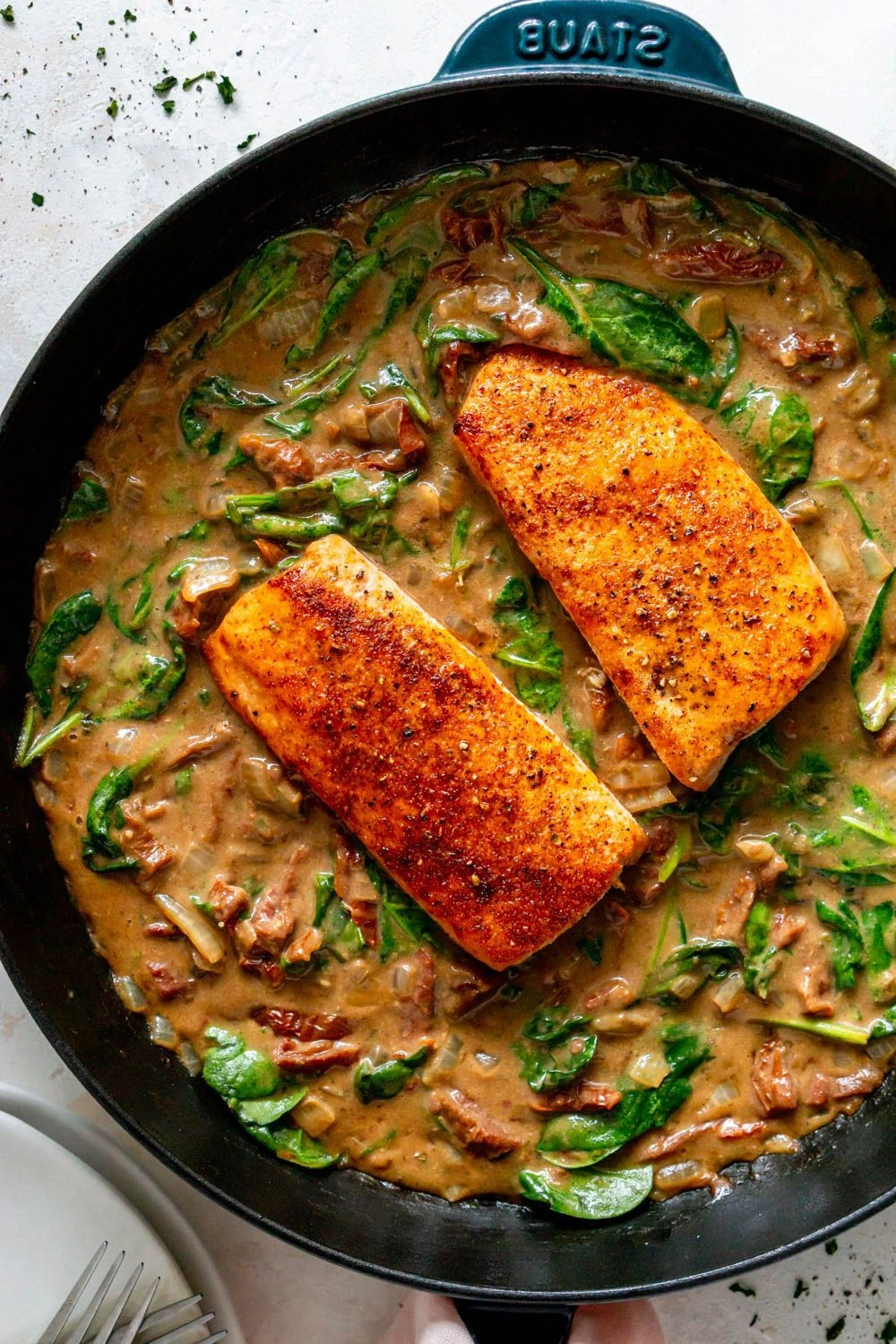
- Eye‑Candy Presentation: The bright green spinach, deep red sun‑dried tomatoes, and golden seared salmon create a vibrant plate that feels as good to look at as it does to eat.
- Health‑Friendly Profile: While indulgent, the dish is balanced with protein, healthy fats, and fiber‑rich vegetables, making it a well-rounded meal without excess calories.
Alright, let’s break down exactly what goes into this masterpiece…
Inside the Ingredient List
The Flavor Base
The foundation of this sauce starts with a simple yet potent aromatics trio: onion, garlic, and a splash of chicken bone broth. The onion provides a sweet, caramelized backdrop once sautéed until translucent, while the minced garlic adds a sharp, aromatic punch that permeates the entire dish. The bone broth not only contributes depth but also introduces a subtle umami note that ties the flavors together. Skipping the broth would leave the sauce tasting flat; instead, use vegetable broth if you’re vegetarian, but the richness will be slightly diminished.
The Texture Crew
Arrowroot powder is the secret weapon for achieving that silky, glossy sauce. Unlike flour or cornstarch, arrowroot thickens at lower temperatures and remains clear, so your sauce stays vibrant in color. If you’re out of arrowroot, a quick slurry of cornstarch and cold water works, but it may give the sauce a slightly cloudy appearance. The coconut milk adds body and a subtle tropical sweetness, balancing the acidity of the tomatoes. Remember, full‑fat coconut milk is key; light versions will produce a thinner sauce that won’t cling to the salmon.
The Unexpected Star
Sun‑dried tomatoes in oil are the flavor bomb that elevates this dish. Their concentrated sweetness and chewy texture contrast beautifully with the tender salmon and leafy spinach. If you prefer a less oily option, you can drain the tomatoes and sauté them with a splash of olive oil just before adding the broth. For a gluten‑free twist, double‑check that the Dijon mustard is certified gluten‑free; otherwise, a gluten‑free mustard will keep the dish safe for those with sensitivities.
The Final Flourish
Fresh basil and Italian seasoning blend are the finishing touches that add herbal brightness and a hint of warmth. The basil’s peppery undertones cut through the richness of the coconut milk, while the Italian seasoning brings a subtle Mediterranean depth. If you’re craving a different herb profile, try swapping basil for parsley or oregano for a slightly earthier finish. The fresh basil should be added at the end to preserve its bright flavor; wilted basil will lose its aromatic punch.
Everything's prepped? Good. Let's get into the real action…
The Method — Step by Step
- Prep the Salmon: Pat the salmon fillets dry with paper towels. Season both sides with salt, pepper, garlic powder, onion powder, and paprika. This seasoning mix will create a flavorful crust that locks in moisture. I love to let them sit for 10 minutes to absorb the spices—this step is crucial for depth.
- Heat the Pan: Place a large skillet over medium‑high heat and add the tablespoon of olive oil. Once the oil shimmers, lay the salmon fillets skin‑side down. You should hear a satisfying sizzle that signals the pan is hot enough to sear properly.
- Sear the Salmon: Cook the fillets for 3–4 minutes on the first side until a golden crust forms. Flip gently and cook for an additional 2–3 minutes, depending on thickness. The goal is a slightly pink center—overcooking will dry it out. This is the moment of truth; watch the edges pull away, a sign of perfect searing.
- Remove and Set Aside: Transfer the salmon to a plate and tent loosely with foil. This keeps the fish warm while you finish the sauce. The foil also prevents the pan from cooling too quickly, which could affect the sauce’s consistency.
- Sauté Aromatics: In the same pan, add the diced onion and a pinch of salt. Cook until translucent, about 3 minutes, then add the minced garlic and red pepper flakes. Stir constantly for 30 seconds to release the garlic’s aroma without burning it.
- Deglaze: Pour in the chicken bone broth, scraping the pan’s bottom with a wooden spoon to lift the caramelized bits. These bits are flavor gold—don’t discard them. The broth should reduce slightly, concentrating the flavors.
- Add the Sun‑Dried Tomatoes: Stir in the sun‑dried tomatoes with their oil, allowing the oil to mingle with the broth. This adds a chewy texture and a burst of sweet‑savory flavor. If you’re using drained tomatoes, sauté them for a minute before adding the broth to re‑infuse the oil.
- Thicken the Sauce: Sprinkle the arrowroot powder over the sauce and whisk vigorously to avoid lumps. Let the sauce simmer for 2 minutes; it should thicken to a glossy consistency. This step is critical—too little arrowroot and the sauce will be thin; too much and it becomes gummy.
- Finish with Coconut Milk: Reduce the heat to low and stir in the coconut milk and Dijon mustard. The mustard adds a subtle tang that brightens the sauce, while the coconut milk gives it body. Simmer gently for another 3 minutes, allowing the flavors to meld.
- Incorporate Greens: Add the baby spinach and basil, stirring until the spinach wilts and the basil releases its aroma. The greens should be bright green, not brown, indicating freshness.
- Return the Salmon: Place the salmon back into the skillet, spooning some sauce over each fillet. Let the fish heat through for 2 minutes, absorbing the sauce’s richness. The salmon should be glossy and the sauce should cling to each fillet.
- Serve Immediately: Plate the salmon on a warmed dish, spooning the remaining sauce over the top. Garnish with extra basil or a squeeze of lemon if you like a bright finish. Serve with your choice of side—rice, pasta, or a crisp salad.
That's it — you did it. But hold on, I've got a few more tricks that'll take this to another level…
Insider Tricks for Flawless Results
The Temperature Rule Nobody Follows
Many cooks think that searing salmon at the highest heat is the key to a crisp crust. In reality, a moderate medium‑high heat ensures even cooking and prevents the outside from burning while the inside stays moist. I’ve found that setting the skillet to 375°F (190°C) gives the perfect balance. If you’re using a cast‑iron skillet, preheat it for at least 5 minutes to avoid sticking.
Why Your Nose Knows Best
When you add the coconut milk, let your nose do the work. A faint, sweet aroma signals that the coconut is warming up without scorching. If it smells overly sweet or burnt, reduce the heat immediately. Smell is a reliable indicator that the sauce is developing the right flavor profile.
The 5‑Minute Rest That Changes Everything
After you finish cooking, let the salmon rest for five minutes before slicing. This allows the juices to redistribute, ensuring each bite stays moist and tender. Skipping this step often results in a dry, rubbery texture that ruins the dish’s elegance.
Mind the Salt
Season the salmon early, but be careful not to over‑salt. A light dusting of salt on the fillets and a pinch in the sauce is enough. Over‑salting can mask the delicate flavors of the basil and sun‑dried tomatoes. Taste the sauce before adding additional salt; if it’s already bright, you’re good to go.
Use Fresh Basil, Not Dried
Fresh basil holds its color and flavor better than dried. If you’re out of fresh basil, substitute with a small handful of dried basil, but add it at the very end to prevent it from losing its aromatic qualities. Dried herbs will give a more muted flavor profile.
Watch the Arrowroot
Arrowroot is a powerful thickener; a little goes a long way. If you use too much, the sauce becomes gummy and loses its silky sheen. Start with 1 teaspoon, and if you need more thickness, add an additional 1/2 teaspoon. Always whisk vigorously to avoid lumps.
Creative Twists and Variations
This recipe is a playground. Here are some of my favorite ways to switch things up:
Spicy Cajun Salmon
Swap the paprika and red pepper flakes for a Cajun spice blend. Add a splash of hot sauce after the sauce has thickened for an extra kick. The result is a smoky, spicy version that pairs perfectly with a cooling cucumber salad.
Almond‑Crusted Salmon
Coat the salmon in finely chopped toasted almonds before searing. The nutty crunch contrasts beautifully with the creamy sauce. Serve over a bed of cauliflower rice for a low‑carb option.
Greek‑Inspired Version
Replace the sun‑dried tomatoes with kalamata olives and add a squeeze of lemon juice. Incorporate feta cheese on top just before serving. The briny olives and tangy feta give the dish a Mediterranean flair that’s both bold and familiar.
Vegan Adaptation
Use firm tofu or tempeh instead of salmon. Marinate the tofu in the same spice mix, then pan‑sear until golden. The sauce remains the same, offering a plant‑based option that’s still rich and satisfying.
Herb‑Infused Coconut Milk
Add a sprig of rosemary or thyme to the coconut milk while it simmers. Remove before serving. The herb imparts a subtle aromatic depth that elevates the sauce’s complexity.
Gluten‑Free Pasta Pairing
Serve the salmon over gluten‑free linguine or spiralized zucchini noodles. The noodles absorb the sauce, creating a cohesive dish that’s both gluten‑free and indulgent.
Storing and Bringing It Back to Life
Fridge Storage
Cool the salmon and sauce completely before placing them in an airtight container. Store in the refrigerator for up to 48 hours. The sauce will thicken slightly; simply stir it back together before reheating.
Freezer Friendly
Freeze the salmon and sauce separately in freezer‑safe bags. For the salmon, keep it in a single layer to avoid sticking. The sauce can be frozen for up to 2 months. Thaw overnight in the refrigerator before reheating.
Best Reheating Method
Reheat the sauce on low heat, adding a splash of water or broth to loosen it if it’s thickened. Warm the salmon in a skillet for a few minutes, covering to keep it moist. A tiny splash of water before reheating steams the dish back to perfection.