Picture this: I’m standing in my kitchen, the air thick with the scent of citrus and sea salt, when the phone rings. “You’ve got to try this,” my friend says, eyes bright with the same culinary fire that burns in mine. I was half‑laughing, half‑dreading the kitchen disaster that had just unfolded—an over‑cooked tuna casserole that tasted like cardboard. But I kept a notebook on my counter, jotting down every failed experiment, and that notebook became my secret weapon.
Fast forward a few weeks, I’m mixing a bowl that looks like a vibrant, green, creamy dream. The avocado gives it that buttery texture, the lemon juice slices the richness, and the tuna adds a subtle, oceanic note that feels like a hug from the sea. The crunch of celery and cucumber pops like tiny fireworks, while the parsley adds a fresh, herbal whisper that ties everything together. I’ve discovered that this isn’t just a salad; it’s a symphony of flavors that dance on the tongue.
What sets this version apart? It’s the combination of fresh, high‑quality ingredients, the careful balance of acidity and fat, and a technique that brings out the best in each component. I’ve been told it’s the most versatile dish I’ve ever made—served as a light lunch, a hearty sandwich filling, or a side that elevates any meal. I dare you to taste this and not go back for seconds; the texture alone will have you craving more. This is hands down the best version you’ll ever make at home.
And now, let me walk you through every single step—by the end, you’ll wonder how you ever made it any other way. I’ll share the little hacks, the timing tricks, and the flavor secrets that make this dish a culinary triumph. Ready for the game‑changer? Let’s dive in.
What Makes This Version Stand Out
- Flavor: The combination of wild tuna’s natural umami with the bright acidity of lemon creates a refreshing, palate‑cleansing bite.
- Texture: Avocado’s silky smoothness contrasts with the crispness of celery and cucumber, giving each mouthful a delightful crunch.
- Freshness: Using fresh parsley instead of dried herbs adds a bright, green note that lifts the entire dish.
- Ease: No cooking required—just mix, season, and serve. It’s a no‑fuss recipe that saves time without compromising flavor.
- Health: Packed with heart‑healthy fats from avocado and omega‑3 fatty acids from wild tuna, this salad feels indulgent yet nourishing.
- Versatility: Works as a light lunch, a hearty sandwich filling, or a side dish for any meal.
- Make‑ahead: The salad can be prepared up to 24 hours in advance; just keep the avocado separate and toss it in just before serving.
- Presentation: The vibrant green color and glossy finish make it Instagram‑ready and impressive for guests.
Alright, let’s break down exactly what goes into this masterpiece…
Inside the Ingredient List
The Flavor Base
Wild tuna is the star here, and choosing a high‑quality can makes all the difference. It’s packed with omega‑3 fatty acids that give the dish a silky, slightly briny flavor. If you’re looking for a lighter option, opt for tuna packed in water rather than oil. Skipping the tuna will leave the salad feeling flat; the protein and depth it provides are irreplaceable.
The Texture Crew
Celery and cucumber add crunch that keeps the salad from feeling mushy. Celery’s peppery bite balances the richness of avocado, while cucumber brings a subtle sweetness and coolness. If you can’t find fresh cucumber, a small handful of frozen peas works surprisingly well, offering a sweet pop of color.
The Unexpected Star
Fresh parsley isn’t just a garnish—it’s a flavor enhancer that brightens the dish. Its bright, herbaceous notes cut through the richness of avocado and tuna. If you’re short on parsley, dill or cilantro can be used, but the flavor profile will shift slightly.
The Final Flourish
Avocado oil or olive oil ties everything together, creating a silky coating that makes each bite feel indulgent. Lemon juice adds a sharp brightness that wakes up the palate. A pinch of kosher salt and fresh‑ground black pepper brings out the flavors without overpowering them.
Everything’s prepped? Good. Let’s get into the real action…
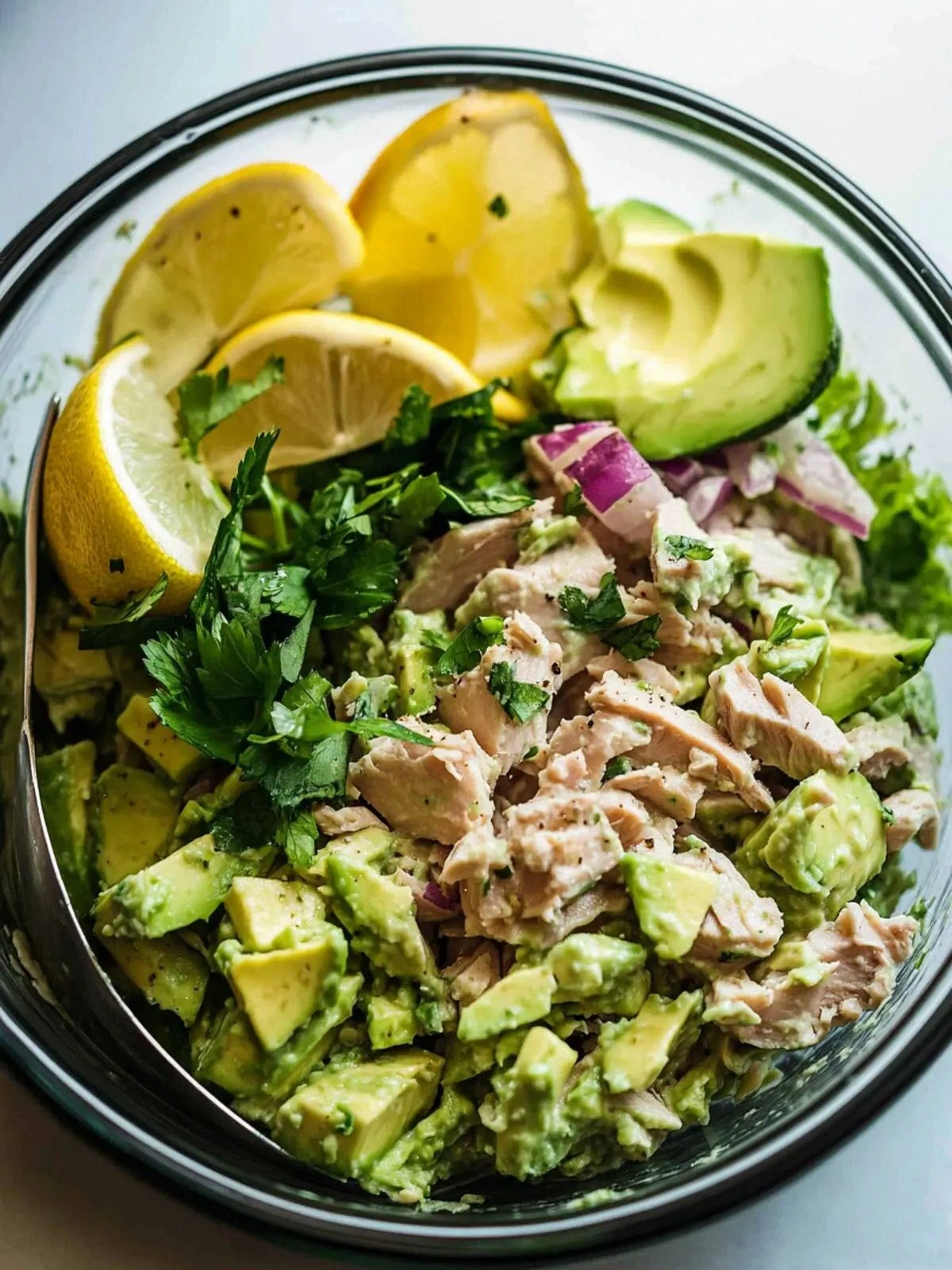
The Method — Step by Step
- Open the two cans of wild tuna and gently drain the liquid. The oil in the tuna will stay with the fish, adding richness to the salad. If you prefer a lighter version, rinse the tuna under cold water to remove excess oil.
- Dice the red onion into fine, translucent cubes. The onion adds a subtle bite that balances the creamy avocado. If you’re sensitive to raw onion, soak the cubes in ice water for 10 minutes to mellow the sharpness.
- Chop the celery into 1‑inch sticks. Keep the sticks slightly longer than the cucumber ribbons for a pleasant crunch. A good trick: cut the celery into a 45‑degree angle to increase surface area for flavor absorption.
- Slice the cucumber into thin ribbons using a mandoline or a sharp knife. The thinness ensures each bite is crisp and the texture feels light.
- Dice the two ripe avocados into bite‑sized cubes, leaving the skin on for a pop of color. The avocado’s buttery texture is the glue that holds the salad together.
- In a large mixing bowl, combine the tuna, onion, celery, cucumber, and avocado. Gently toss to distribute the ingredients evenly. This is the moment of truth—make sure the avocado remains intact and doesn’t turn into a mushy mess.
- Add the fresh parsley, lemon juice, avocado oil or olive oil, salt, and black pepper. Stir slowly, letting the dressing coat each component. The citrus will brighten the dish and the oil will give it a glossy finish.
- Taste and adjust seasoning. If the salad feels flat, add a splash more lemon juice or a pinch more salt. If it’s too tart, a drizzle of oil can mellow it out.
- Let the salad rest for 5 minutes before serving. This allows the flavors to meld and the avocado to settle, giving the dish a cohesive taste.
- Serve immediately on a bed of mixed greens, as a sandwich filling, or alongside grilled fish. The salad is best enjoyed fresh, but it can be stored for a short time if needed.
That’s it— you did it. But hold on, I’ve got a few more tricks that will take this to another level…
Insider Tricks for Flawless Results
The Temperature Rule Nobody Follows
Even though this salad requires no cooking, the temperature of your ingredients matters. Keep the avocado at room temperature for 10 minutes before cutting; it will stay creamy and not turn into a mush. Likewise, let the tuna sit out briefly after draining so it’s easier to mix. A cold salad can feel flat, while a slightly warm one is more inviting.
Why Your Nose Knows Best
Before you add salt, sniff the lemon juice. A fresh, bright citrus aroma signals that the juice is at its peak. If the lemon smells dull, it may have lost its zing. A fresh lemon adds a vibrant lift that can’t be replicated with bottled juice.
The 5‑Minute Rest That Changes Everything
After tossing the salad, let it sit for 5 minutes. This brief rest allows the flavors to marry and the avocado to settle, preventing it from floating to the top. I’ve seen people skip this step, and the result is a salad that feels disjointed.
The Secret of Fresh‑Ground Pepper
Use freshly ground black pepper instead of pre‑ground. The aroma and heat are much more pronounced, giving the salad an extra kick. If you’re in a hurry, a sprinkle of pepper at the end of tossing will still add a subtle depth.
The One‑Time Add‑On
Add a tablespoon of capers for a briny burst that pairs perfectly with tuna. Capers also add a subtle crunch, turning the salad into a more complex dish. If you’re avoiding sodium, use a pinch of sea salt instead.
Creative Twists and Variations
This recipe is a playground. Here are some of my favorite ways to switch things up:
Mediterranean Twist
Swap the wild tuna for grilled shrimp and add Kalamata olives, feta cheese, and a splash of oregano. This version feels like a seaside brunch, with a salty, tangy finish that’s perfect for summer.
Spicy Kick
Add a teaspoon of sriracha or a pinch of cayenne pepper to the dressing. The heat balances the richness of avocado and brings an exciting contrast that’s sure to please.
Herb‑Infused
Replace parsley with a mix of basil and mint for a sweet, aromatic profile. The fresh herbs lend a bright, garden‑fresh flavor that pairs well with grilled chicken.
Vegan Upgrade
Omit the tuna entirely and add chickpeas or diced tofu for protein. The dish becomes a wholesome, plant‑based lunch that’s still creamy and satisfying.
Breakfast Boost
Serve the salad over a toasted English muffin or a slice of sourdough bread. Top with a poached egg for a protein‑rich breakfast that feels indulgent yet balanced.
Gluten‑Free Option
Pair the salad with a gluten‑free wrap or serve it over quinoa for a hearty, gluten‑free meal that’s still light and refreshing.
Storing and Bringing It Back to Life
Fridge Storage
Store the salad in an airtight container with the avocado separate. Keep the dressing on the side or add a splash of lemon juice before serving. The salad will stay fresh for up to 24 hours, though the texture of the avocado may soften slightly.
Freezer Friendly
Freezing the salad isn’t recommended because the avocado will turn mushy. However, you can freeze the tuna separately and thaw it when you’re ready to assemble. This way, the texture remains intact.
Best Reheating Method
If you need to warm the salad, gently microwave the tuna portion for 30 seconds, then combine with fresh avocado and dressing. Adding a tiny splash of water before reheating steams the tuna back to a juicy, tender state.