Picture this: you’re in the middle of a bustling kitchen, the air thick with the scent of sugar and spices, and you’re staring at a stack of pound cake that’s been waiting for you since yesterday. The moment I pulled that loaf from the fridge, I thought, “What if I could turn this ordinary slab into an extraordinary, dessert‑like masterpiece?” The answer came in the form of a daring experiment that combined the indulgence of gulab jamun, the silky richness of rabdi, and the comforting familiarity of a classic pound cake. The result? A towering, multi‑layered confection that feels like a holiday celebration every time you bite.
I had always been a fan of gulab jamun, those golden‑brown, syrup‑soaked balls that melt on the tongue. But I’d never imagined pairing them with a cake. One rainy afternoon, a friend dared me to make the most decadent dessert I could, and I set out to create something that would make even the most skeptical taste buds swoon. I started by drizzling a thin layer of sweetened condensed milk over the pound cake, then carefully arranging the gulab jamun on top, letting the syrup seep into the crumb. When the rabdi, a creamy milk‑based sauce, was poured over the ensemble, the whole creation looked like a golden, syrupy waterfall cascading over a buttery mound. I dared you to taste this and not go back for seconds.
What truly sets this version apart is the way the textures dance together. The pound cake provides a firm, slightly crumbly foundation, while the gulab jamun introduces a chewy, syrupy burst that contrasts with the smooth, velvety rabbi. The addition of crushed almonds, cashews, and pistachios adds a subtle crunch and nutty aroma that elevates the entire experience. The saffron threads lend a warm, floral note that lingers on the palate, while the cardamom provides a subtle peppery sweetness that balances the richness. It’s a harmony of flavors and textures that feels both exotic and familiar at the same time.
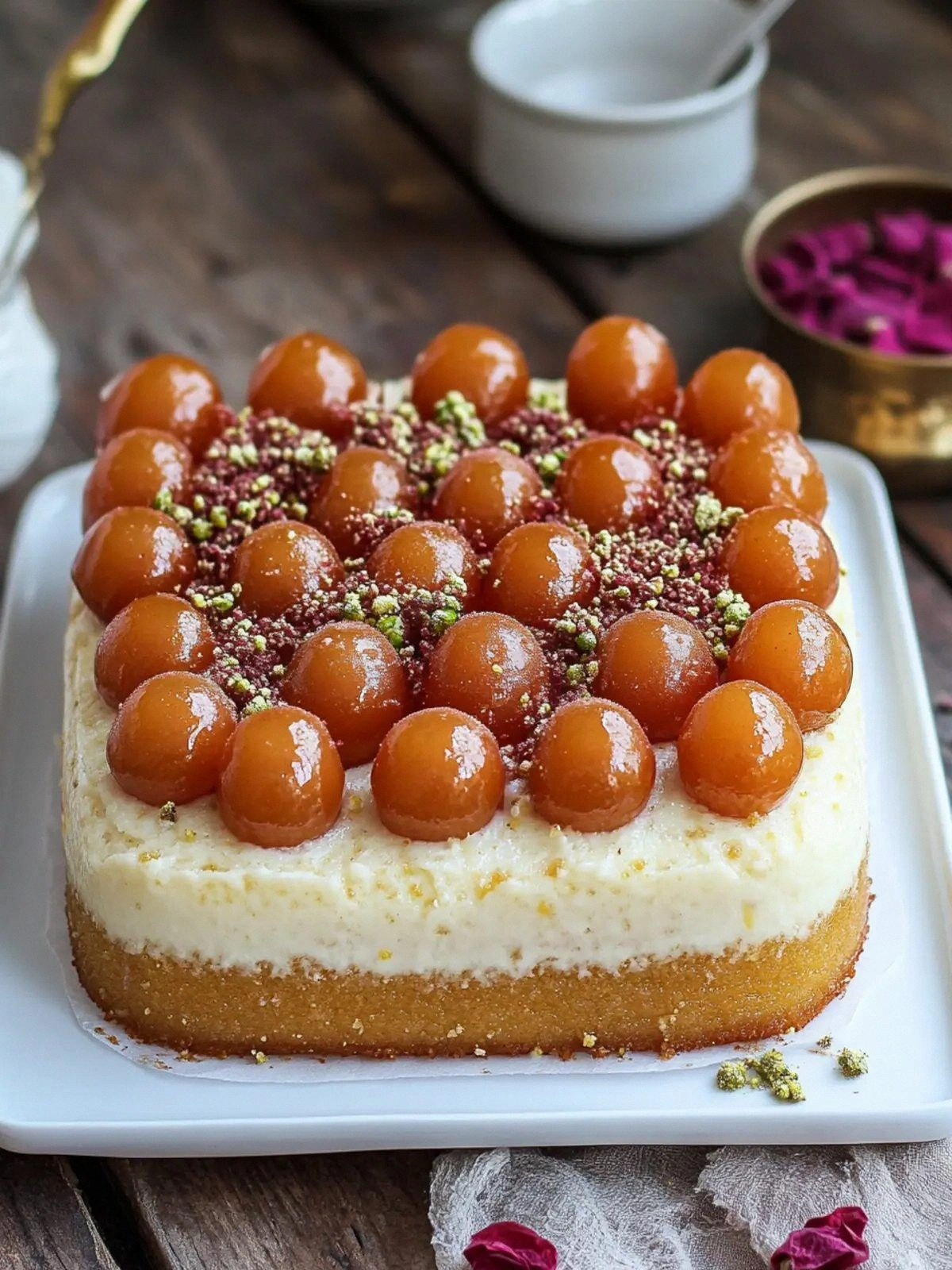
And let’s not forget the visual impact. When you slice into this cake, you’re greeted with a rainbow of colors: the golden hue of the gulab jamun, the creamy blush of the rabdi, and the nutty specks that sprinkle across the surface. The moment the knife cuts through, the syrup drips down like liquid gold, creating a dramatic, almost cinematic effect that’s as pleasing to the eye as it is to the taste buds. This is hands down the best version you’ll ever make at home.
What Makes This Version Stand Out
- Flavor Depth: The combination of sweet, nutty, and floral notes creates a complex palate that keeps you guessing with every bite.
- Texture Contrast: From the dense, buttery pound cake to the chewy gulab jamun and the silky rabdi, each layer offers a distinct mouthfeel.
- Visual Appeal: The golden syrup, bright saffron, and nutty garnish make the cake a showstopper on any table.
- Ease of Assembly: No complicated piping or elaborate decoration—just layer, drizzle, and chill.
- Make‑Ahead Friendly: The cake can be assembled a day in advance, allowing flavors to meld and making it perfect for last‑minute celebrations.
- Ingredient Quality: Using premium gulab jamun and fresh whole milk ensures the richest, most authentic taste.
- Crowd‑Pleaser: Guests of all ages will find the sweet, comforting flavors irresistible.
- Adaptability: Swap out nuts or spices for personal preference, and the core concept remains intact.
Alright, let’s break down exactly what goes into this masterpiece...
Inside the Ingredient List
The Flavor Base
The pound cake is the cornerstone of this dessert. I use a classic buttery pound cake that’s dense enough to hold the syrup without becoming soggy. The cake’s mild sweetness complements the syrupy gulab jamun without overpowering it. If you’re on a diet, you can switch to a low‑fat version, but be prepared for a slightly drier texture. The key is to bake the cake to a golden brown and let it cool completely before layering.
The gulab jamun are made from khoya or milk solids, shaped into small balls, and fried until golden. They’re then soaked in a sugar syrup flavored with rose water and cardamom. The syrup gives them that signature sweet, floral aroma. If you can’t find ready‑made gulab jamun, you can make them from scratch, but this takes a bit of extra time—so I usually buy them pre‑made for convenience. The syrup also serves as the first layer of flavor, infusing the cake with a subtle sweetness that lingers.
The Texture Crew
The crushed almonds, cashews, and pistachios add a crunchy texture that breaks up the softness of the cake and the syrup. Each nut brings a unique flavor profile: almonds give a buttery, slightly sweet note; cashews add a creamy undertone; pistachios contribute a hint of earthiness and a vibrant green color. If you’re allergic to nuts, you can replace them with toasted coconut flakes or even finely chopped dried fruit for a different crunch.
Crushed cardamom is a staple in many Indian desserts, and here it provides a subtle peppery sweetness that balances the richness of the rabdi and the syrup. The cardamom also adds a fragrant aroma that elevates the overall sensory experience. If you’re looking for a milder flavor, reduce the amount or use a single pinch of ground cardamom instead of crushed.
The Unexpected Star
Saffron strands are the unsung hero that ties the dessert together. They infuse the rabdi with a warm, floral aroma and a golden hue that makes the cake visually stunning. Saffron is notoriously expensive, but a little goes a long way—just a handful of strands will do. If you’re on a budget, you can substitute with a pinch of turmeric for color, but the flavor will be different.
The rabdi itself is a thick, creamy milk sauce that’s sweetened with powdered sugar and condensed milk. It’s essentially a sweetened milk that has been reduced until it becomes thick enough to coat the gulab jamun and the cake. The result is a silky, velvety coating that clings to every bite. The condensed milk adds a caramelized sweetness that balances the cardamom and saffron.
The Final Flourish
The whipped cream, sweetened with powdered sugar and cardamom, serves as the finishing layer that adds lightness and a fresh contrast to the rich, heavy core. Whipping the cream to soft peaks gives it a fluffy texture that melts in your mouth. The final touch is a sprinkle of crushed pistachios on top, which provides a satisfying crunch and a pop of color that makes the cake look like a piece of art.
Everything's prepped? Good. Let's get into the real action...
The Method — Step by Step
- Cool the Pound Cake: After baking, allow the pound cake to cool on a wire rack for at least 2 hours. This ensures it’s firm enough to hold the syrup and the gulab jamun. If you’re in a hurry, you can use a pre‑baked loaf, but make sure it’s completely cooled before proceeding. The cooling time also lets the flavors settle, giving the cake a richer taste.
- Prepare the Gulab Jamun Syrup: In a small saucepan, combine 1 cup of water, 1 cup of sugar, a few strands of saffron, and a pinch of cardamom. Bring to a gentle boil, then lower the heat and simmer for 5 minutes. The syrup should be slightly thickened but still pourable. If you prefer a stronger syrup, let it reduce for an additional 5 minutes. Once ready, pour a thin layer over the cooled cake.
- Arrange the Gulab Jamun: Carefully place 14 gulab jamun on top of the syrup‑coated cake, spacing them evenly. Gently press them into the cake so that they sink slightly and absorb some of the syrup. The syrup should coat each ball, giving it a glossy sheen. This step is critical for achieving the signature sweet, syrupy bite that defines this dessert.
- Make the Rabdi: In a saucepan, heat 1 cup of whole milk until it starts to steam. Add 1 ⅓ cups of milk powder and whisk until smooth. Stir in ⅓ cup of sweetened condensed milk and 5 teaspoons of powdered sugar. Keep the mixture on low heat, stirring constantly, until it thickens to a custard‑like consistency. The rabdi should coat the back of a spoon and leave a thin film when you tilt the pan.
- Drizzle the Rabdi: Pour the hot rabdi over the gulab jamun, allowing it to soak into the cake and the syrup. The rabdi should cascade down the sides like a golden waterfall. Let the mixture sit for 10 minutes so the syrup is fully absorbed. This step ensures that every bite is packed with flavor.
- Whip the Cream: In a mixing bowl, whip 2 cups of whipping cream until soft peaks form. Gradually add 5 teaspoons of powdered sugar and a pinch of cardamom, continuing to whip until stiff peaks appear. The whipped cream should be light, airy, and slightly sweet, providing a fresh contrast to the rich rabdi.
- Layer the Cream: Spread the whipped cream evenly over the rabdi layer. Use a spatula to smooth the surface, ensuring a uniform top. The cream layer adds a lightness that balances the heaviness of the syrup and the cake.
- Finish with Nuts: Sprinkle 2 tablespoons of crushed almonds, 2 tablespoons of crushed cashews, and 2 tablespoons of crushed pistachios over the whipped cream. Gently press the nuts into the surface so they adhere. The nuts not only add crunch but also enhance the flavor profile with their subtle nuttiness.
- Chill and Serve: Refrigerate the cake for at least 4 hours, preferably overnight, to allow the flavors to meld. When ready to serve, slice with a sharp knife and watch the syrup run down the sides. The cake should feel firm yet tender, with a perfect balance of sweet, nutty, and floral notes.
That's it — you did it. But hold on, I've got a few more tricks that'll take this to another level...
Insider Tricks for Flawless Results
The Temperature Rule Nobody Follows
When making the rabdi, keep the heat low and stir constantly. A high temperature can cause the milk to scorch and create a burnt flavor that ruins the delicate sweetness. I always set my stove to medium‑low and use a double boiler if I have one; the gentle heat ensures a silky, smooth finish. If the mixture starts to bubble too vigorously, reduce the heat immediately.
Why Your Nose Knows Best
Before adding the cardamom, sniff the cardamom pods; a strong, fresh aroma indicates that the pods are fresh and potent. If the aroma is weak, the flavor will be muted, and the entire dessert will feel flat. I always buy cardamom in whole pods and crush them fresh right before use. This simple step guarantees that the cardamom’s subtle heat shines through.
The 5-Minute Rest That Changes Everything
After pouring the rabdi, let the mixture rest for 5 minutes before adding the whipped cream. This brief pause allows the syrup to settle and prevents the cream from becoming too thin. It also lets the flavors meld, giving the dessert a more cohesive taste. I’ve seen people skip this step, and the result is a watery texture that’s hard to recover.
Crunchy Nut Layer vs. Smooth Finish
If you’re a fan of crunch, sprinkle the nuts on top of the whipped cream. However, if you prefer a smoother finish, lightly toast the nuts in a dry skillet until fragrant, then sprinkle them on the cake after the rabdi has set. Toasting brings out the nut’s natural oils, adding a richer flavor that pairs beautifully with the sweet syrup.
Saffron Extraction Tip
To get the most color and flavor from saffron, soak the strands in a tablespoon of warm milk for 10 minutes before adding them to the rabdi. The milk extracts the saffron’s vibrant color and floral notes, resulting in a more intense hue. I always do this step because it transforms the dessert into a showstopper.
Creative Twists and Variations
This recipe is a playground. Here are some of my favorite ways to switch things up:
Mango Rabdi Cake
Add ripe mango puree to the rabdi, replacing a portion of the milk. The mango adds a tropical sweetness that complements the cardamom and saffron. Serve with a drizzle of mango lassi on the side for an extra burst of flavor.
Chocolate Ganache Layer
Replace the whipped cream with a glossy chocolate ganache made from dark chocolate and heavy cream. The ganache adds a rich, bittersweet depth that pairs wonderfully with the sweet syrup. Finish with a dusting of cocoa powder for an elegant touch.
Almond Milk Rabdi
For a dairy‑free version, substitute whole milk with almond milk and use a plant‑based sweetener. The almond milk adds a subtle nutty flavor that enhances the overall taste. This variation is perfect for vegans and those with lactose intolerance.
Cardamom‑Rose Rabdi Cake
Infuse the rabdi with rose water and a pinch of ground cardamom. The floral notes give the dessert a romantic aroma that’s perfect for special occasions. Pair it with rose‑infused whipped cream for a complete floral experience.
Spiced Chai Rabdi Cake
Add a teaspoon of chai spice blend to the rabdi for a warm, spiced twist. The cinnamon, cloves, and ginger add depth and warmth, making this cake a cozy treat for cooler evenings. Serve with a cup of chai for a full sensory experience.
Storing and Bringing It Back to Life
Fridge Storage
Store the assembled cake in an airtight container in the refrigerator for up to 3 days. The layers will stay firm, and the flavors will continue to meld. If you’re preparing it a day in advance, cover it loosely with parchment paper to prevent the cake from drying out.
Freezer Friendly
For longer storage, wrap the cake tightly in plastic wrap and place it in a freezer bag. Freeze for up to 2 weeks. When ready to serve, thaw in the refrigerator overnight. The texture may change slightly, but the flavor remains intact.
Best Reheating Method
If the cake has been frozen, gently warm it in a low‑heat oven at 300°F for 10 minutes, then let it cool before slicing. This prevents the cake from becoming too soft. A quick splash of water before reheating will steam the cake back to a luscious, moist consistency.