I was standing in the middle of my kitchen, staring at a burnt batch of toast and a bag of stale bread that had been sitting in the pantry for weeks. My roommate, ever the culinary daredevil, challenged me to turn that disaster into something that would make even the most seasoned foodie swoon. I laughed, grabbed my trusty sourdough loaf, and thought, “What if I could combine the comfort of a sandwich with the boldness of bibimbap?” The result was a Korean Bibimbap Sandwich that is, quite frankly, the most audacious fusion dish I’ve ever dared to create.
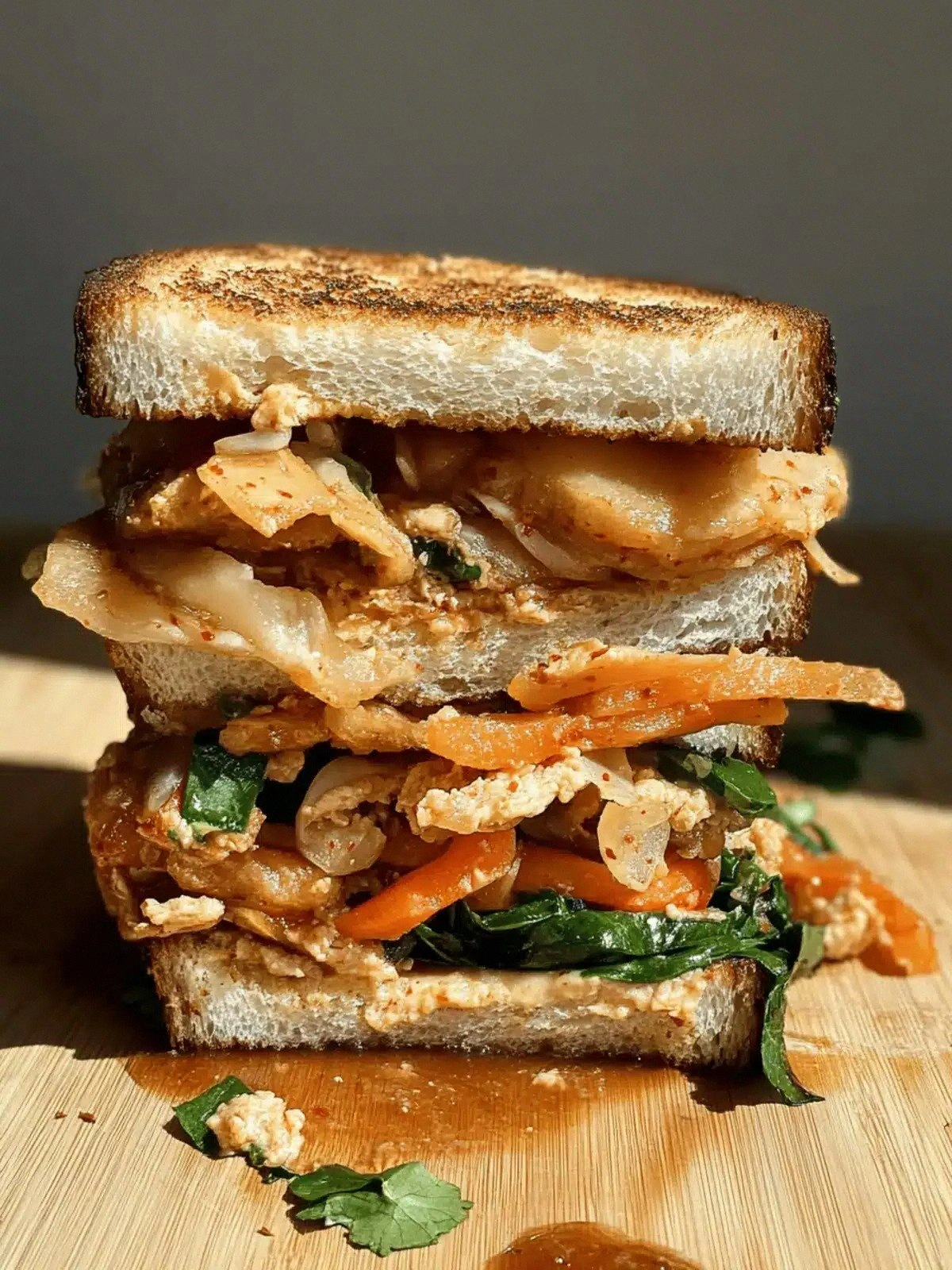
Picture the first bite: the bread is crisp on the outside, buttery, and the interior is a riot of colors—deep green spinach, earthy oyster mushrooms, and the fiery splash of kimchi. The aroma is a heady mix of toasted sesame, fermented tang, and a whisper of smoky tempeh. The texture is a delightful contrast: crunchy edges, tender fillings, and a creamy layer of vegan mayo that ties everything together. If you thought you’d never taste bibimbap in sandwich form, I dare you to taste this and not go back for seconds.
The secret sauce? A sauce that coats the fillings like velvet, yet still lets each component sing. It’s a harmonious blend of gochujang, soy sauce, sesame oil, and a touch of agave, giving it that signature sweet heat that makes every bite a revelation. The mushrooms soak up the sauce, the tempeh adds a nutty chew, and the kimchi offers a fermented punch that cuts through the richness of the mayo. This sandwich is hands down the best version you’ll ever make at home, and I’ll be honest—I ate half the batch before anyone else got a chance.
Most recipes get this completely wrong. They either overcook the vegetables or forget the sesame oil that brings depth. Here’s what actually works: a quick sear for the mushrooms, a gentle sauté for the spinach, and a precise balance of sauces that doesn’t drown the bread. Picture yourself pulling this out of the oven, the whole kitchen smelling incredible, and the first bite sending a wave of satisfaction through your palate. Stay with me here—this is worth it.
I’ve spent the last week tweaking this recipe, adding a splash of rice vinegar to brighten the flavors, and letting the tempeh marinate in gochujang for an hour to infuse it with heat. The result? A sandwich that’s not just a meal but an experience—one that will have your guests asking for the recipe while you’re still cleaning up. Let me walk you through every single step—by the end, you’ll wonder how you ever made it any other way.
What Makes This Version Stand Out
- Flavor: The sauce is a symphony of sweet, spicy, and umami notes that elevate the humble sandwich into a gourmet delight.
- Texture: Crispy bread, tender mushrooms, chewy tempeh, and silky mayo create a layered mouthfeel that keeps you coming back.
- Visual Appeal: Every bite bursts with color—emerald spinach, ruby kimchi, and golden mushrooms—making it Instagram-worthy.
- Convenience: All ingredients are pantry staples or quick to prep, so you can assemble this masterpiece in under 45 minutes.
- Plant‑Based Power: Packed with protein from tempeh and mushrooms, and healthy fats from sesame oil, it’s a balanced, satisfying option.
- Make‑Ahead Friendly: You can pre‑assemble the sandwich and reheat it without losing crunch, making it perfect for meal prep.
- Versatility: Swap out tempeh for tofu or add avocado for extra creaminess—this sandwich adapts to your cravings.
- Audience Impact: Friends rave about the unexpected crunch and the bold, comforting flavors that transport them to Seoul.
Inside the Ingredient List
The Flavor Base
Gochujang, a fermented Korean chili paste, is the cornerstone of this sandwich’s heat. It brings depth and a subtle sweetness that balances the savory soy sauce. If you can’t find gochujang, substitute it with a mix of Sriracha and a splash of honey, but the flavor profile will shift slightly toward a more Western heat.
Soy sauce—both light and dark—adds the umami backbone. Light soy gives a clean saltiness, while dark soy contributes a hint of caramel and color. If you’re watching sodium, use a low‑sodium version of each, but taste as you go to ensure the right balance.
Sesame oil is the aromatic finish that ties everything together. It’s essential for that toasted, nutty undertone that elevates the sandwich. A teaspoon is enough; too much will overpower the delicate flavors of the vegetables.
Rice vinegar cuts through the richness of the mayo and adds brightness. It’s also responsible for the slight tang that mimics the zing you’d get from a fresh Korean rice bowl. Replace it with apple cider vinegar for a slightly fruitier note.
Agave syrup provides a subtle sweetness that balances the heat of the gochujang. It’s a vegan-friendly sweetener that dissolves easily in sauces. If you prefer maple syrup, use a 1:1 ratio but expect a different flavor profile.
Vegan mayo adds creaminess and binds the fillings together. It’s the vehicle that carries the sauce across the sandwich, ensuring every bite is moist. A half cup is enough for four servings; adjust if you want a richer or lighter mouthfeel.
Vegan kimchi brings that fermented tang and crunch that is quintessential to bibimbap. It’s the star that gives the sandwich its authentic Korean identity. If you can’t find kimchi, try fermented mustard greens or pickled radish as an alternative.
The Texture Crew
Pearl oyster mushrooms are chosen for their meaty texture and delicate flavor. They absorb sauces beautifully and add a subtle briny note that complements the kimchi. If you can’t find them, button mushrooms or shiitake will work, but the texture will be slightly different.
Tempeh is the protein powerhouse. Its firm, nutty texture holds up against the heat of the pan and the moisture of the veggies. Marinating it in gochujang for an hour infuses it with heat, but you can skip the marination if you’re in a hurry; just season it lightly before cooking.
Baby spinach is the green that brings freshness and a pop of color. It wilts quickly, providing a tender bite that contrasts with the crunch of the bread. If you prefer a stronger green, try kale or Swiss chard, but you’ll need to cook them longer.
Sourdough bread is the foundation. Its chewy crumb and tangy flavor provide a sturdy base that can handle the moist fillings without becoming soggy. Choose a loaf with a good crust thickness; thin loaves tend to overcook.
The Unexpected Star
Vegan mayo is more than just a creamy filler; it’s the glue that binds the flavors together. Its neutral taste allows the gochujang and kimchi to shine while adding a silky mouthfeel. A half cup per four servings is perfect; more will make the sandwich soggy.
If you’re not a fan of mayo, a light drizzle of tahini or a spread of avocado can replace it, but be prepared for a different flavor profile and texture.
The Final Flourish
A splash of rice vinegar brightens the entire sandwich, cutting through the richness and adding a subtle zing. It’s a quick tweak that elevates the dish from good to unforgettable.
Remember to taste the sauce before assembling the sandwich. The balance of sweet, spicy, salty, and sour is crucial; adjust each component to suit your palate.
Everything’s prepped? Good. Let’s get into the real action...
The Method — Step by Step
- Start by slicing the sourdough loaf horizontally into two equal halves. Toast each half in a dry skillet over medium heat until golden brown and fragrant—about 2 minutes per side. The heat will crisp the crust while keeping the interior soft, setting the stage for the fillings.
- While the bread is toasting, heat a tablespoon of sesame oil in a large skillet over medium‑high heat. Add the pearl oyster mushrooms, seasoning them with a pinch of salt and pepper. Cook for 4–5 minutes until they’re browned and caramelized; the mushrooms will release their juices and develop a rich flavor.
- Remove the mushrooms and set them aside. In the same skillet, add the diced tempeh, a splash of soy sauce, and a tablespoon of gochujang. Stir-fry for 3–4 minutes until the tempeh is golden and the sauce has thickened, coating the pieces in a glossy, spicy glaze.
- Add the baby spinach to the skillet, tossing it with the tempeh and mushrooms. Cook just until the spinach wilts—about 1 minute. The spinach should remain bright green and slightly tender, not mushy.
- In a small bowl, whisk together 1 tablespoon of rice vinegar, 1 tablespoon of agave syrup, 1 tablespoon of soy sauce, and a teaspoon of sesame oil. This quick sauce will coat the fillings and give the sandwich that signature kick.
- Pour the sauce over the sautéed mixture and stir to combine. Let it simmer for 2 minutes, allowing the flavors to meld and the sauce to thicken slightly.
- Spread a generous layer of vegan mayo on the toasted bottom half of the bread. This creamy base will keep the sandwich moist and provide a neutral canvas for the bold flavors.
- Layer the sautéed mushrooms, tempeh, and spinach onto the mayo, then top with a handful of vegan kimchi. Press down gently to ensure the fillings are evenly distributed.
- Place the toasted top half of the bread over the fillings, pressing down lightly. Slice the sandwich into quarters or serve whole, depending on your preference. Serve immediately while the bread is still warm and the fillings are juicy.
Insider Tricks for Flawless Results
The Temperature Rule Nobody Follows
Many cooks think a low heat will prevent burning, but the secret lies in medium‑high heat. This ensures the mushrooms caramelize quickly without releasing too much moisture, and the tempeh develops a golden crust that holds its shape. I once tried low heat and ended up with soggy mushrooms that didn’t hold up in the sandwich.
Why Your Nose Knows Best
Before you even taste, smell the sauce as it simmers. The aroma of toasted sesame and fermented gochujang should fill the kitchen. If it’s not popping, let it cook a minute longer; a lack of scent often means the sauce isn’t fully developed.
The 5‑Minute Rest That Changes Everything
After assembling the sandwich, let it rest on a cutting board for five minutes. This allows the fillings to settle, the flavors to marry, and the bread to absorb just enough moisture without becoming soggy. It’s a simple trick that elevates the entire eating experience.
Use a Skillet, Not a Pan
A heavy skillet with a wide base distributes heat evenly, preventing hotspots that can burn the mushrooms. If you’re using a non‑stick pan, watch the heat closely; non‑stick surfaces can overheat and degrade the sauce’s flavor.
Mind the Kimchi’s Saltiness
Kimchi is naturally salty, so be careful when adding extra soy sauce. Taste the mixture before the final assembly, and if it’s already briny, reduce the soy sauce by half. This keeps the sandwich from becoming a salty disaster.
Keep the Bread Warm
If you’re prepping ahead, wrap the toasted bread in foil and place it in a low oven (200°F) for 5 minutes before assembly. Warm bread stays crisp longer and doesn’t absorb moisture from the fillings.
Creative Twists and Variations
Spicy Avocado Bibimbap
Swap the vegan mayo for mashed avocado seasoned with lime juice and a pinch of chili flakes. The creamy, buttery texture of avocado complements the heat from the gochujang, creating a new flavor frontier that’s both refreshing and fiery.
Gluten‑Free Version
Use a gluten‑free sourdough loaf or a sturdy ciabatta made without wheat flour. The texture will be slightly different, but the flavor profile remains intact. This variation makes the sandwich accessible to those with gluten sensitivities.
Breakfast Kick‑Starter
Add a layer of sautéed tofu cubes seasoned with turmeric and black pepper. This protein boost turns the sandwich into a hearty breakfast that keeps you full until lunch. The turmeric adds a warm, earthy tone that pairs well with the kimchi’s sharpness.
Vegan BBQ Twist
Replace the gochujang with a smoky BBQ sauce and add a handful of pickled onions. The sweet, smoky flavor pairs beautifully with the tempeh’s nutty bite, giving the sandwich a Southern‑inspired vibe while staying plant‑based.
Summer Garden Edition
Add fresh sliced cucumber and bell pepper for extra crunch. Drizzle with a squeeze of lemon juice before assembly to brighten the flavors. This lighter version is perfect for hot days and brings a garden freshness to the bibimbap concept.
Cheesy Surprise
Sprinkle a thin layer of nutritional yeast or vegan cheddar between the mayo and the fillings. The cheesy tang will melt slightly, creating a gooey, comforting layer that adds another dimension to the sandwich.
Storing and Bringing It Back to Life
Fridge Storage
Wrap the assembled sandwich tightly in parchment paper, then place it in an airtight container. Store in the refrigerator for up to 2 days. When ready to eat, let it sit at room temperature for 15 minutes before slicing to soften the crust slightly.
Freezer Friendly
Separate the bread and fillings before freezing. Wrap the bread halves in foil and the fillings in a freezer bag. Freeze for up to 3 months. When you’re ready, thaw overnight in the fridge, then toast the bread and reheat the fillings in a skillet.
Best Reheating Method
Reheat the sandwich in a preheated oven at 350°F for 5–7 minutes, or until the bread is crisp again. If you prefer a quick fix, use a toaster oven or a skillet with a lid to trap heat. Add a splash of water to the fillings before reheating; this steams them back to perfection without drying out.