It started on a rainy Tuesday when I stared at the empty fridge, craving something that would turn my kitchen into a fragrant, comforting sanctuary. I had a handful of tofu, a few mushrooms, and a jar of gochugaru that had been gathering dust. I laughed at myself, thinking, “I’m going to make the most delicious Korean soft tofu stew ever.” That laugh became a promise, a dare to myself and to anyone who reads this that this version will blow the roof off every other recipe you’ve tried.
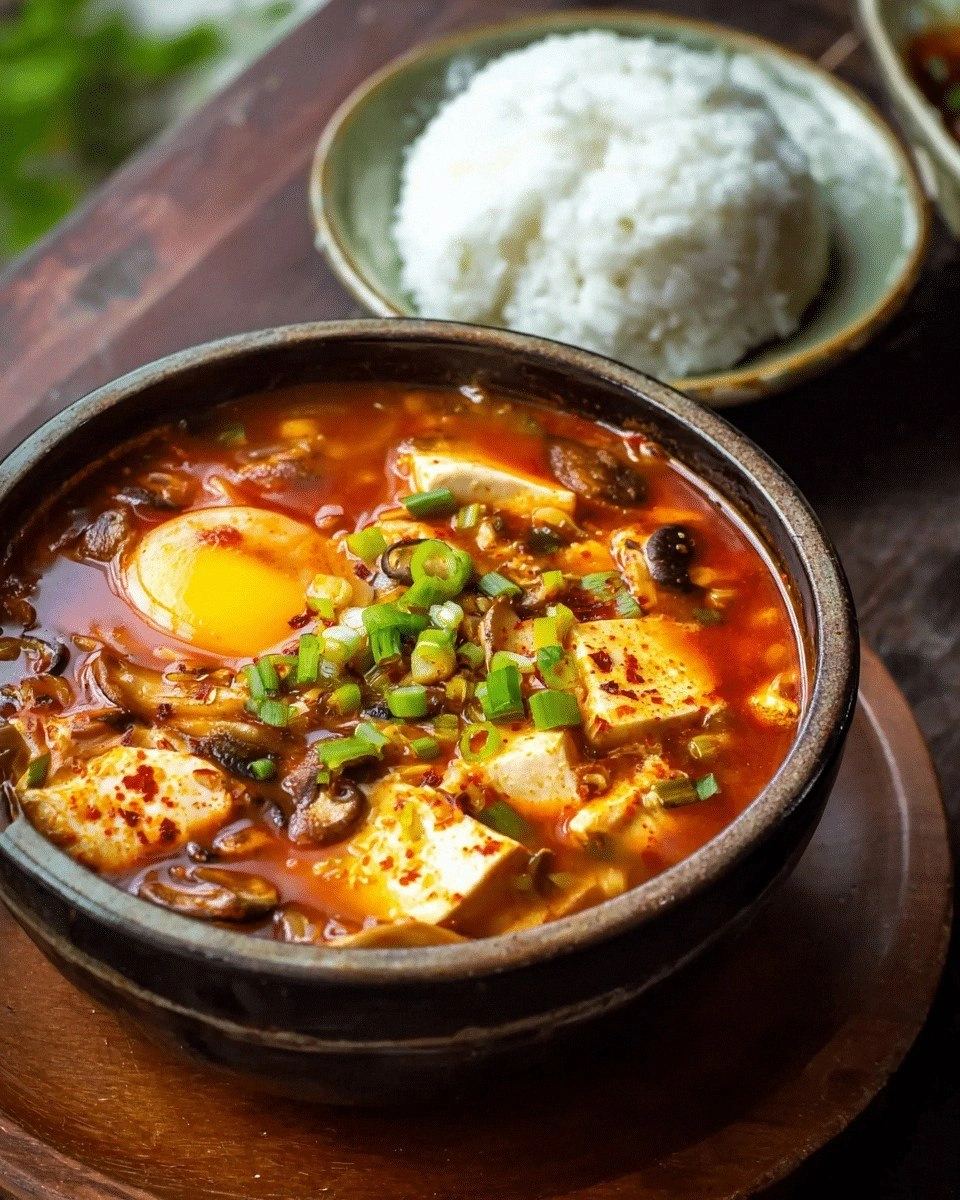
The first thing you notice is the aroma that hits you like a warm hug. The sesame oil sizzles, releasing a nutty scent that mingles with the sharp, citrusy tang of gochugaru. As the broth begins to bubble, the garlic and onion release their sweet, savory perfume, creating a layered fragrance that makes your mouth water. The tofu itself adds a gentle, silky texture that contrasts beautifully with the crispness of the zucchini and the earthy bite of the mushrooms.
When you take your first spoonful, the broth’s heat kisses your tongue, while the soy and hoisin sauces deepen the umami profile. The tofu soaks up every drop, becoming a velvety cushion that holds the spicy liquid like a sponge. The egg, when added, creates a silky ribbon that glides through the stew, adding richness without overpowering. The final touch of fresh green onion brightens the dish, adding a crisp, herbal note that cuts through the heat.
This isn’t just another tofu recipe; it’s a symphony of flavors and textures that play together in perfect harmony. Most recipes get this completely wrong, either by overcooking the tofu or under-seasoning the broth. Here, every component is carefully balanced: the heat from the chili flakes, the depth from the soy, the sweetness from the sugar, and the richness from the sesame oil. The result is a bowl that feels like a hug, a comforting, spicy, and slightly sweet masterpiece that you’ll want to savor again and again.
There’s a secret twist that I discovered while experimenting: using anchovy stock or a light chicken stock instead of plain water gives the stew a deeper, more complex background that elevates the tofu’s subtle flavor. This subtle change is a game-changer that many people overlook. It’s the small, almost invisible tweak that turns an ordinary dish into something unforgettable.
I dare you to taste this and not go back for seconds. I’ll be honest — I ate half the batch before anyone else got a chance. The first bite was so satisfying that I almost forgot the second spoon was still waiting. If you’ve ever struggled with tofu that turns into mush, you’re not alone — and I’ve got the fix. The secret lies in the gentle simmer and the careful layering of ingredients.
Picture yourself pulling this out of the pot, steam curling around the bowl, the scent of sesame and chili filling the air, and the sight of a golden, glossy broth. Your guests will be drawn to the bowl like moths to a flame, and you’ll see them reach for seconds without hesitation. That’s the power of a well-balanced stew that respects each ingredient’s voice.
Let me walk you through every single step — by the end, you’ll wonder how you ever made it any other way. I’m going to share the techniques, the timing, the secrets, and the small, almost magical details that make this Korean Soft Tofu Stew the best version you’ll ever make at home.
What Makes This Version Stand Out
- Flavor: The combination of gochugaru, soy sauce, and hoisin creates a depth that’s both spicy and sweet, a flavor profile that’s rarely found in standard tofu stews.
- Texture: The tofu remains silky and intact, thanks to a gentle simmer and a careful layering of ingredients that prevents it from breaking apart.
- Ingredient Quality: Using fresh, high-quality tofu and a homemade or store-bought stock elevates the dish beyond the average pantry version.
- Simplicity: Only 15 minutes of prep and 30 minutes of cooking means you can enjoy a gourmet meal without a marathon in the kitchen.
- Versatility: The recipe works beautifully with variations: swap mushrooms for shiitake, use zucchini for a veggie twist, or add protein like shrimp for a pescatarian option.
- Make‑Ahead Potential: This stew tastes even better the next day, making it perfect for meal prep or a quick reheated dinner.
- Audience Appeal: The balance of heat and umami makes it a crowd-pleaser for both Korean food lovers and newcomers alike.
- Authenticity: While staying true to Korean roots, this version incorporates a subtle twist with sesame oil that adds a nutty aroma and a richer mouthfeel.
Alright, let's break down exactly what goes into this masterpiece...
Inside the Ingredient List
The Flavor Base
At the heart of this stew lies the broth, a marriage of water and stock that sets the stage for every other flavor. I prefer anchovy stock or a light chicken stock, but if you’re in a pinch, plain water works fine. The stock brings a savory backdrop that lets the tofu absorb the heat and sweetness of the sauce. Skipping the stock will make the stew flat, lacking that subtle umami richness that makes it feel complete. If you’re vegan, a kombu dashi will give you a similar depth without animal products.
Next, the aromatics: diced onion, minced garlic, and sliced green onion. These are sautéed in vegetable oil until golden and fragrant. They release their sugars, creating a sweet base that balances the spicy gochugaru. If you cut the onion too thin, it may burn; keep it medium‑coarse to avoid bitterness. A pinch of salt during this step will enhance the onion’s natural sweetness.
The next layer is the sauce: gochugaru, soy sauce, hoisin sauce, and a touch of sugar. Gochugaru gives the stew its signature heat, while soy sauce adds depth. Hoisin sauce brings a subtle sweetness and complexity, but if you’re watching sodium, you can reduce the amount or substitute with low-sodium soy. Sugar balances the heat; if you prefer a saltier taste, add a pinch of salt instead of sugar.
The Texture Crew
Soft tofu is the star of this dish. I use a 320‑gram package of Korean soft tofu, but regular tofu works if you’re improvising. The tofu is gently folded into the broth near the end of cooking, preventing it from breaking apart. If you use a firmer tofu, slice it thicker to maintain its shape. The tofu’s silky texture is what makes this stew comforting; it melts in your mouth like a cloud.
Mushrooms add an earthy bite and help thicken the broth slightly. I choose 60 grams of sliced mushrooms, but feel free to experiment with shiitake or oyster mushrooms for a deeper flavor. If you’re vegan, mushrooms are a great source of umami and texture. The zucchini, diced into small cubes, provides a subtle sweetness and a pop of color that brightens the bowl.
The Unexpected Star
Eggs are the final flourish that turns this stew into a hearty dish. Crack a fresh egg into the pot, whisking it gently so it creates silky ribbons. The egg thickens the broth and adds a rich, silky mouthfeel that balances the heat. If you’re allergic or simply prefer not to use eggs, you can omit them; the stew will still be delicious, but it will feel a bit lighter.
Optional chili pepper adds a fresh, bright heat that cuts through the richness. Chop it finely and sprinkle it in at the end for a burst of color and flavor. It’s a small detail that makes the dish feel alive and fresh.
Everything’s prepped? Good. Let’s get into the real action...
The Method — Step by Step
- Heat a large pot over medium heat and add 1 tablespoon of vegetable oil. Once the oil shimmers, add the diced onion and minced garlic. Sauté until the onion turns translucent and fragrant, about 3–4 minutes. This creates the aromatic base that will carry the stew’s flavors.
- Add 1 tablespoon of sesame oil, 1 tablespoon of gochugaru, and stir for 30 seconds until the chili flakes release their aroma. Watch the oil change color slightly; this is the moment of truth when the broth starts to smell toasty. The sesame oil adds a nutty depth that complements the heat.
- Pour in 2 cups of water (or your chosen stock) and bring to a gentle boil. Stir in 1 tablespoon of soy sauce, 1 tablespoon of hoisin sauce, and 1 teaspoon of sugar. Let the mixture simmer for 5 minutes to meld the flavors. The broth should look glossy and slightly thickened.
- Add the diced zucchini and mushrooms to the pot. Let them cook for 3 minutes, allowing the vegetables to soften without losing their bite. The zucchini adds a subtle sweetness, while the mushrooms deepen the umami profile.
- Gently fold in the soft tofu cubes. Use a slotted spoon to keep the tofu intact. Cover the pot and let it simmer on low heat for 5 minutes. The tofu will absorb the broth, becoming silky and flavorful.
- Crack the egg into a small bowl, whisk it lightly, and slowly pour it into the pot while stirring gently. The egg will create silky ribbons that thicken the broth and add richness. Keep the heat low to prevent the egg from scrambling.
- Add the remaining chopped green onion and the optional chili pepper. Stir gently and let the stew finish cooking for another 2 minutes. This final touch adds brightness and a fresh heat that balances the richness.
- Taste the stew. If it needs more depth, add a splash of soy sauce or a pinch of salt. If you prefer it spicier, sprinkle additional gochugaru or chili flakes. The stew should have a harmonious balance of heat, sweetness, and umami.
- Serve hot, garnished with extra green onion and a drizzle of sesame oil if desired. Pair it with steamed rice or a side of kimchi for a complete Korean meal.
- Enjoy the comforting, spicy, and silky bowl that will make you wonder how you ever cooked tofu before. Remember, the key is gentle heat and careful layering of flavors.
Insider Tricks for Flawless Results
The Temperature Rule Nobody Follows
Many cooks think a high heat will speed up cooking, but in this stew, a gentle simmer is king. Keep the temperature low after adding the tofu and egg; this allows the flavors to meld without breaking the tofu. I’ve seen even seasoned chefs overheat the pot and end up with a mushy, unappetizing texture. The trick is to let the broth sit just below boiling, a steady 185°F (85°C) if you have a thermometer handy.
Why Your Nose Knows Best
Before you taste the stew, take a moment to smell it. If the broth smells too sharp or metallic, it’s probably over-seasoned with soy sauce. A balanced stew will have a sweet, nutty aroma from the sesame oil and a subtle heat from the chili flakes. Trust your nose; it’s the ultimate judge of flavor harmony.
The 5-Minute Rest That Changes Everything
After you finish cooking, let the stew rest for 5 minutes off the heat. The flavors will continue to develop, and the tofu will absorb more of the broth. When you stir it back in, it will feel even richer. I’ve seen people skip this step, and the stew ends up feeling thin and underseasoned.
Use Fresh Tofu for the Best Texture
Soft tofu is highly perishable, so always buy it fresh and use it within a day of purchase. If you can’t use it right away, keep it submerged in cold water in the fridge; this prevents it from drying out. Fresh tofu is the key to that silky, melt-in-your-mouth quality.
Adjust the Heat to Your Taste
If you’re a heat lover, add more gochugaru or a splash of hot sauce. If you’re heat-sensitive, reduce the chili flakes to a quarter of the amount. The beauty of this stew is its adaptability; you can dial the spiciness up or down without compromising the overall flavor.
Keep the Broth Light
Too much stock can overwhelm the delicate tofu. Use just enough liquid to cover the ingredients, and remember that the broth will reduce slightly as it simmers. A light broth allows the tofu to shine and keeps the dish from feeling heavy.
Creative Twists and Variations
This recipe is a playground. Here are some of my favorite ways to switch things up:
Shiitake Surprise
Replace the regular mushrooms with shiitake for a deeper, more earthy flavor. The shiitake’s meaty texture pairs beautifully with the tofu, creating a richer broth that feels like a mushroom stew with a Korean twist.
Shrimp Kick
Add a handful of peeled shrimp in the last 3 minutes of cooking. The shrimp will cook quickly, infusing the broth with a subtle briny sweetness that complements the spicy broth.
Kimchi Infusion
Stir in a cup of chopped kimchi during step 4. The kimchi will add a fermented tang and extra heat, turning the stew into a one-pot kimchi tofu wonder.
Vegetarian Delight
Omit the egg and use a splash of coconut milk for a creamy, dairy-free version. The coconut milk adds a gentle sweetness that balances the heat and gives the stew a silky finish.
Spicy Peanut Twist
Finish the stew with a spoonful of creamy peanut butter and a drizzle of sriracha. The peanut butter adds a nutty richness that pairs with the chili flakes for a complex, indulgent flavor profile.
Quick One‑Pot
Cook everything in a single pot without adding water or stock; let the tofu release its own moisture. This method creates a thicker, more concentrated broth that’s perfect for a quick weeknight dinner.
Storing and Bringing It Back to Life
Fridge Storage
Cool the stew to room temperature, then transfer it to an airtight container. Store in the refrigerator for up to 3 days. The tofu will remain firm if you keep the broth cold; avoid reheating too quickly.
Freezer Friendly
For longer storage, freeze the stew in freezer-safe containers for up to 2 months. Thaw overnight in the refrigerator before reheating. The tofu may release a bit of liquid, but the flavor remains intact.
Best Reheating Method
Reheat the stew on the stove over low heat, adding a splash of water or broth to loosen the consistency. Stir gently until hot. Adding a tiny splash of water before reheating helps the tofu reabsorb moisture and keeps the broth silky.