Love this? Pin it for later! 📌
Why This Recipe Works
- Air-dry overnight: A 24-hour refrigerator rest dries the skin so it bronzes into glass-thin crackling.
- Two-temperature roast: Start low and slow to render fat, then blast at high heat for a lacquer finish.
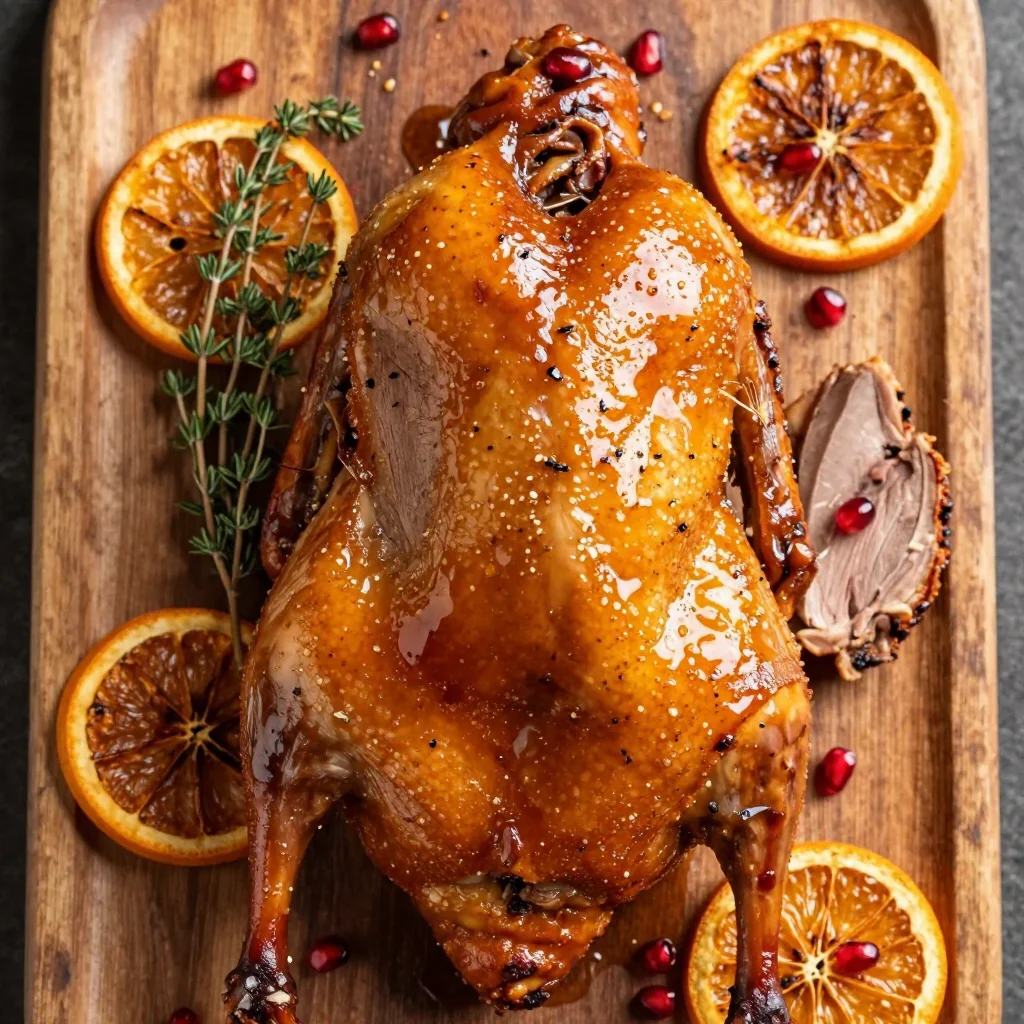
- Orange–honey glaze: Fresh juice, zest, and a touch of honey create glossy, bittersweet caramel without burning.
- Aromatics in the cavity: Thyme, garlic, and orange halves perfume the meat from the inside out.
- Built-in pan sauce: Rendered duck fat mingles with glaze drippings—whisk in stock for instant gravy.
- Feeds a (small) crowd: One duck yields generous slices for four, or elegant portions for six with sides.
Ingredients You'll Need
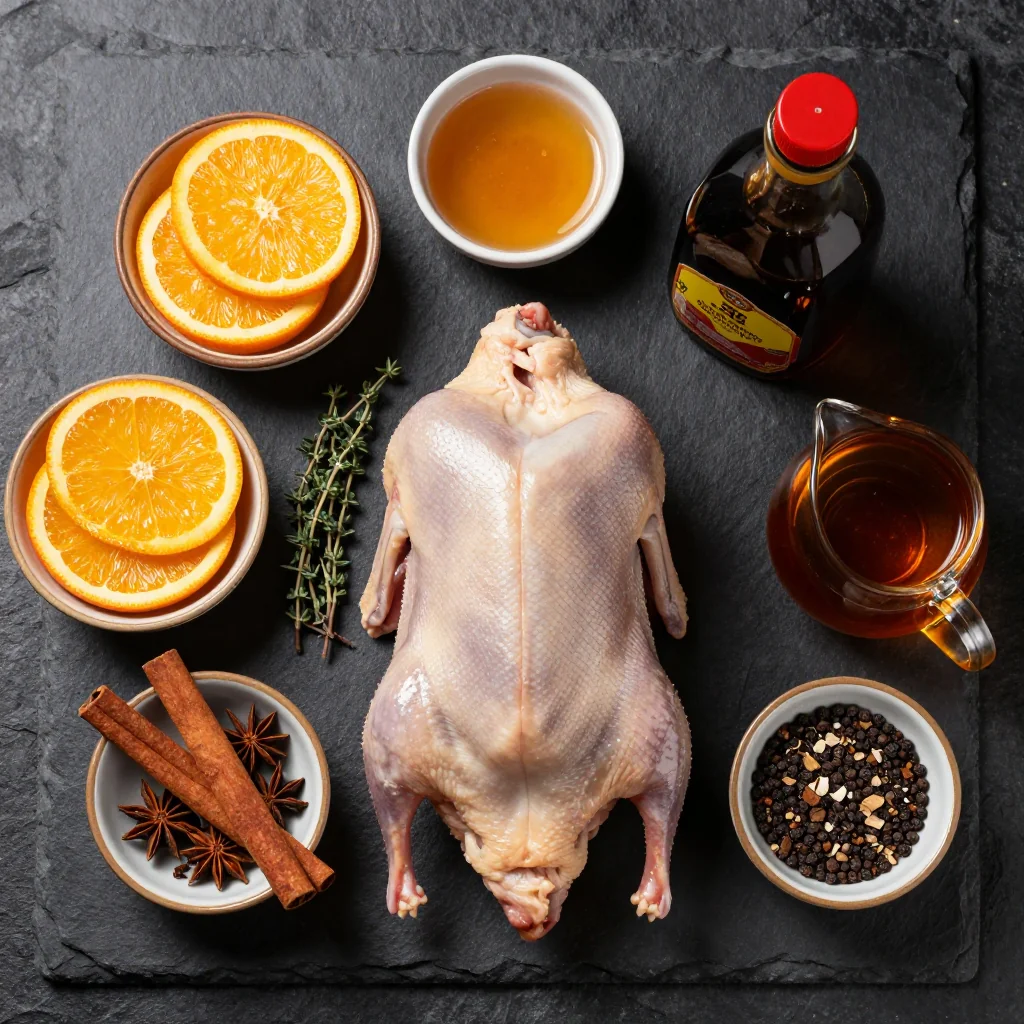
Quality matters here. Seek a fresh, free-range duck—usually around 5½ lb—plump and cool to the touch with no off smells. If frozen, thaw 48 hours in the refrigerator, still in its original wrapper, set over a rimmed tray to catch drips. The glaze comes together from everyday citrus, but use unwaxed oranges so you can harvest their fragrant zest without wax residue. Finally, grab a bottle of dry white wine you’d happily drink; you'll only use ½ cup in the recipe, and the rest keeps the cook cheerful.
Duck & Dry Rub: One whole duck (giblets removed), 1 Tbsp kosher salt, 1 tsp freshly ground black pepper, ½ tsp baking powder (helps skin blister).
Cavity Aromatics: 1 head garlic halved horizontally, 2 sprigs fresh thyme, 1 small onion quartered, 1 orange halved.
Orange-Honey Glaze: 1 cup fresh orange juice (about 3 medium oranges), zest of 1 orange, 3 Tbsp honey, 2 Tbsp soy sauce, 1 Tbsp rice vinegar, 1 tsp cornstarch (optional, for silkier body).
Serving & Pan Sauce: ½ cup dry white wine, ½ cup low-sodium chicken stock, 1 Tbsp cold butter, flaky salt for finishing.
Substitutions: Blood oranges deliver dramatic crimson flesh and a floral edge. Maple syrup stands in for honey if you prefer. If you avoid alcohol, swap the wine for additional stock plus 1 tsp lemon juice for brightness.
How to Make New Year's Day Roast Duck with Orange Glaze
Pat, Prick, and Season
Remove duck from packaging; discard giblet packet and any extra fat from the cavity. Blot the bird meticulously inside and out with paper towels—surface moisture is the enemy of crisp skin. Using a sharp paring knife or metal skewer, prick the skin all over the breasts and thighs, piercing only the fat layer, not into the meat. (Think aerating, not stabbing.) Mix salt, pepper, and baking powder; sprinkle evenly inside and outside, nudging some under the neck flap. Place duck, breast-side up, on a rack set inside a rimmed baking sheet and refrigerate, uncovered, 24–48 hours. The skin will dry to parchment-like tautness.
Preheat & Stuff
Remove duck from refrigerator 1 hour before roasting so it comes to room temperature (cold skin seizes and cooks unevenly). Preheat oven to 300°F (150°C). Stuff cavity with garlic halves, thyme, onion, and orange halves; their steam perfumes the meat. Fold wingtips under the bird and tie legs together with kitchen twine for tidy presentation.
Low & Slow Render
Roast duck 1 hour 30 minutes. The gentle heat melts subcutaneous fat without coloring the skin too quickly. Every 30 minutes, slip on an oven mitt and tilt the pan over a heat-proof bowl, spooning or siphoning off rendered fat. (Save this liquid gold for roast potatoes or confit veggies.)
Make the Orange Glaze
While the duck roasts, whisk orange juice, zest, honey, soy, and rice vinegar in a small saucepan. Bring to a simmer over medium heat; reduce to ⅓ cup, 8–10 minutes. The bubbles will grow syrupy. If you want restaurant-gloss, dissolve cornstarch in 1 tsp water, whisk in, and cook 30 seconds more. Set aside; glaze thickens as it cools.
Crank the Heat & Glaze
Increase oven to 425°F (220°C). Brush duck generously with half the glaze; return to oven 10 minutes. Repeat with remaining glaze and roast 8–10 minutes more, until an instant-read thermometer plunged into the thickest part of the thigh registers 175°F (79°C) and skin is mahogany. If skin browns too quickly, tent loosely with foil.
Rest & Deglaze
Transfer duck to a carving board, tent loosely with foil, rest 15 minutes so juices resettle. Meanwhile, set roasting pan over a burner on medium. Pour off all but 1 Tbsp fat, add wine, and scrape browned bits with a wooden spoon. Whisk in stock and any juices from the resting board; simmer 3 minutes. Swirl in cold butter for silky body. Taste; season with salt and pepper.
Carve & Serve
Snip twine. Remove legs by slicing through the joint where thigh meets body, then separate drumsticks and thighs. Carve breast meat on a slight bias into ¼-inch slices. Arrange on a warmed platter, drizzle with a spoonful of pan sauce, and sprinkle flaky salt for crunch. Garnish with fresh orange zest and thyme sprigs for color.
Expert Tips
Don't Skip the Air-Dry
Moisture is crisp skin’s nemesis. Even 8 hours uncovered beats skipping this step entirely.
Render & Remove Fat
Baste or pour off fat every 30 minutes; pooled liquid steams skin and prevents browning.
Trust Your Thermometer
Color alone can mislead; 175°F in the thigh ensures meat is cooked yet still juicy.
Rest Before Carving
A 15-minute rest lets juices redistribute; carve too soon and they flood the board.
Make-Ahead Glaze
Glaze keeps 1 week refrigerated; reheat gently so honey doesn’t scorch.
Duck Fat Treasure
Strain and chill rendered fat; it stores months and elevates potatoes or greens.
Variations to Try
- Spice-Citrus: Add ½ tsp Chinese five-spice and 1 star-anise pod to the glaze for aromatic warmth.
- Smoky Maple: Replace honey with maple syrup and add 1 tsp smoked paprika to the salt mix.
- Pomegranate Twist: Swap half the orange juice for pomegranate molasses; finish with fresh arils.
- Herb Medley: Slide thin slices of truffle butter or herb butter under the breast skin before roasting.
- Cherry-Port Glaze: Replace orange juice with cherry juice and add 2 Tbsp port for richness.
- Two-Duck Feast: Roast two smaller (4 lb) ducks side-by-side; increase total time about 15 minutes.
Storage Tips
Leftovers: Cool duck completely. Refrigerate carved meat and skin separately in airtight containers up to 4 days. Warm gently in a 300°F oven covered with foil; add a splash of stock to keep moist.
Freezing: Wrap portions tightly in plastic, then foil; freeze up to 2 months. Thaw overnight in refrigerator and reheat as above.
Make-Ahead: The glaze can be prepared up to 1 week ahead. Refrigerate, then reheat gently so honey liquefies. Duck can be air-dried up to 48 hours before roasting—perfect for holiday scheduling.
Frequently Asked Questions
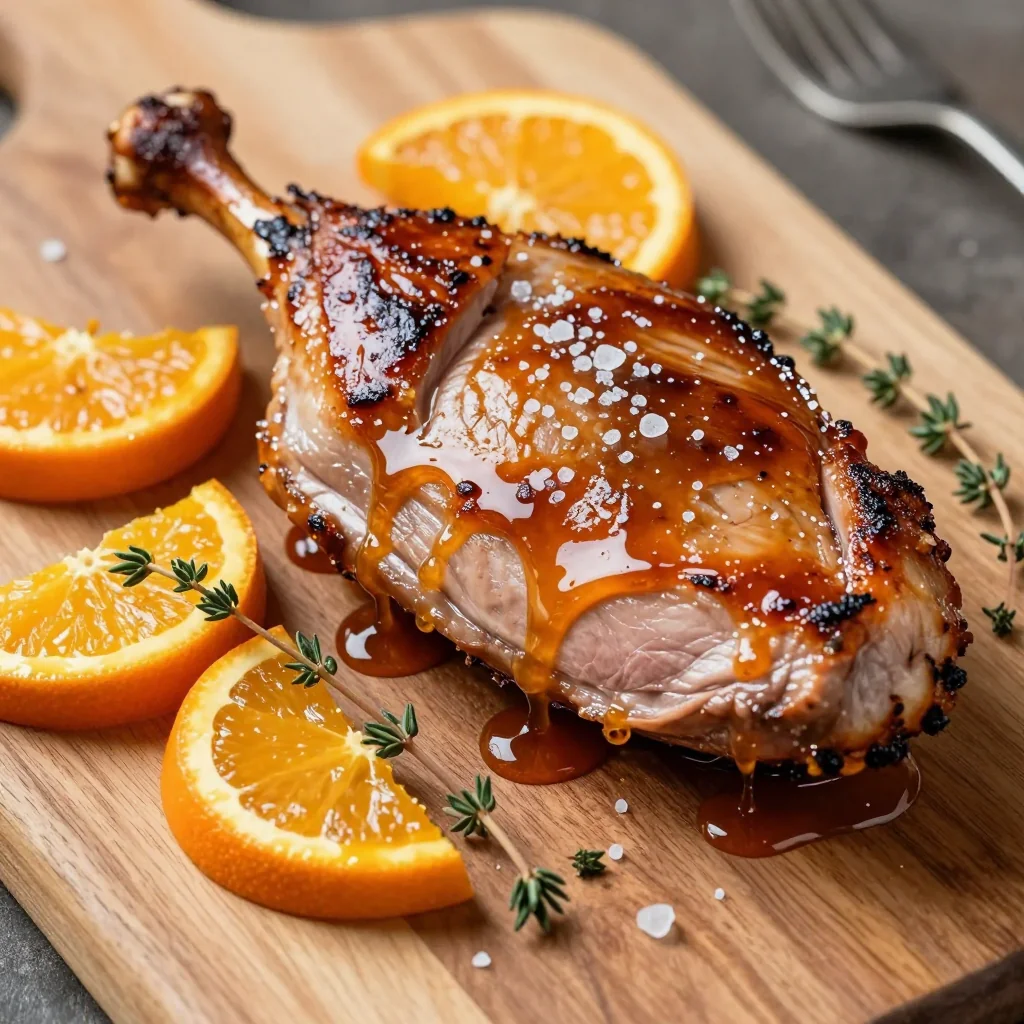
New Year's Day Roast Duck with Orange Glaze
Ingredients
Instructions
- Air-Dry: Pat duck dry, season with salt mix, refrigerate uncovered 24–48 hours.
- Preheat: Let duck stand 1 hour at room temp. Heat oven to 300°F.
- Stuff & Roast: Fill cavity with aromatics. Roast 1 h 30 min, spooning off fat twice.
- Glaze: Simmer orange juice, zest, honey, soy, vinegar until syrupy, 8–10 min.
- Brown: Increase oven to 425°F. Brush duck with half the glaze; roast 10 min. Repeat with remaining glaze; roast 8–10 min more, until 175°F in thigh.
- Rest & Sauce: Rest 15 min. Deglaze pan with wine and stock; whisk in butter. Serve duck with sauce.
Recipe Notes
Save rendered duck fat for roast potatoes or confit vegetables. Glaze can be made up to 1 week ahead; reheat gently before using.