Introduction
Picture this: I’m standing in my cramped kitchen, the aroma of burnt onions wafting through the vents, and I swear the whole place is about to turn into a smoke alarm circus. That night, a friend dared me to whip up a Vietnamese duck noodle soup that would make my taste buds sing. I grabbed a duck, a bunch of lemongrass, and a handful of bamboo shoots, and I swear I almost set the stove on fire. The result? A steaming bowl that feels like a hug from a Vietnamese grandma, with a broth that is both sweet and savory, a duck that is tender like a cloud, and noodles that cling to the broth like a secret handshake. I dare you to taste this and not go back for seconds. This is hands down the best version you’ll ever make at home.
When I first cracked open the duck, the sound was a quiet thud—no clatter, no clink, just the gentle weight of a promise to be cooked slowly, patiently, and lovingly. The air filled with the citrusy sharpness of lemongrass and the warm, earthy scent of ginger, while the onions and shallots sizzled and released their sweet nectar. The broth bubbled like a clear, amber lake, each bubble whispering stories of simmered herbs and spices. The moment you take that first spoonful, the flavors unfold like a well‑written novel: the broth’s subtle umami, the duck’s silky texture, and a hint of lemon that cuts through the richness, leaving a clean finish. The noodles, made from scratch, have a slight chew that holds onto the broth, making every bite a satisfying, comforting experience.
What sets this version apart is the meticulous layering of flavors and the use of fresh, high‑quality ingredients that many recipes overlook. I’ve trimmed the duck’s skin to reduce greasiness, then seared it to create a caramelized crust that adds depth without overpowering the broth. I’ve also used a blend of dried bamboo shoots and shiitake mushrooms, which bring an earthy umami that is often missing in simpler versions. The secret lies in the slow, low‑heat simmer that allows the aromatics to meld, creating a broth that is both fragrant and rich, yet light enough to enjoy with friends and family. The result is a dish that feels both authentic and approachable, a bowl that invites you to linger and savor.
And there’s a twist you won’t expect: I add a splash of lemon juice at the very end, just before serving, to brighten the broth and balance the duck’s richness. This tiny touch transforms the soup from comforting to refreshing, making it perfect for any season. Okay, ready for the game‑changer? Let me walk you through every single step — by the end, you’ll wonder how you ever made it any other way.
What Makes This Version Stand Out
- Authentic Flavor: The broth is built on a slow, low‑heat simmer that extracts deep umami from lemongrass, ginger, and dried mushrooms, creating a foundation that feels genuinely Vietnamese.
- Texture Contrast: The duck is seared to a caramelized crust before being braised, giving you a tender interior with a subtle crunchy edge that shatters like thin ice.
- Freshness Factor: I use fresh bamboo shoots and shiitake mushrooms instead of canned or dehydrated versions, which adds a real, earthy bite to every spoonful.
- Balanced Sweetness: The natural sweetness from the onions and shallots is balanced by the acidity of lemon juice, creating a harmonious profile that lingers on the palate.
- Make‑Ahead Friendly: The broth can be cooked a day ahead, and the duck can be pre‑marinated, making this dish a breeze for busy weeknights.
- Versatile Serving: Pair it with fresh herbs, chili oil, or a splash of fish sauce to tailor the soup to your personal taste.
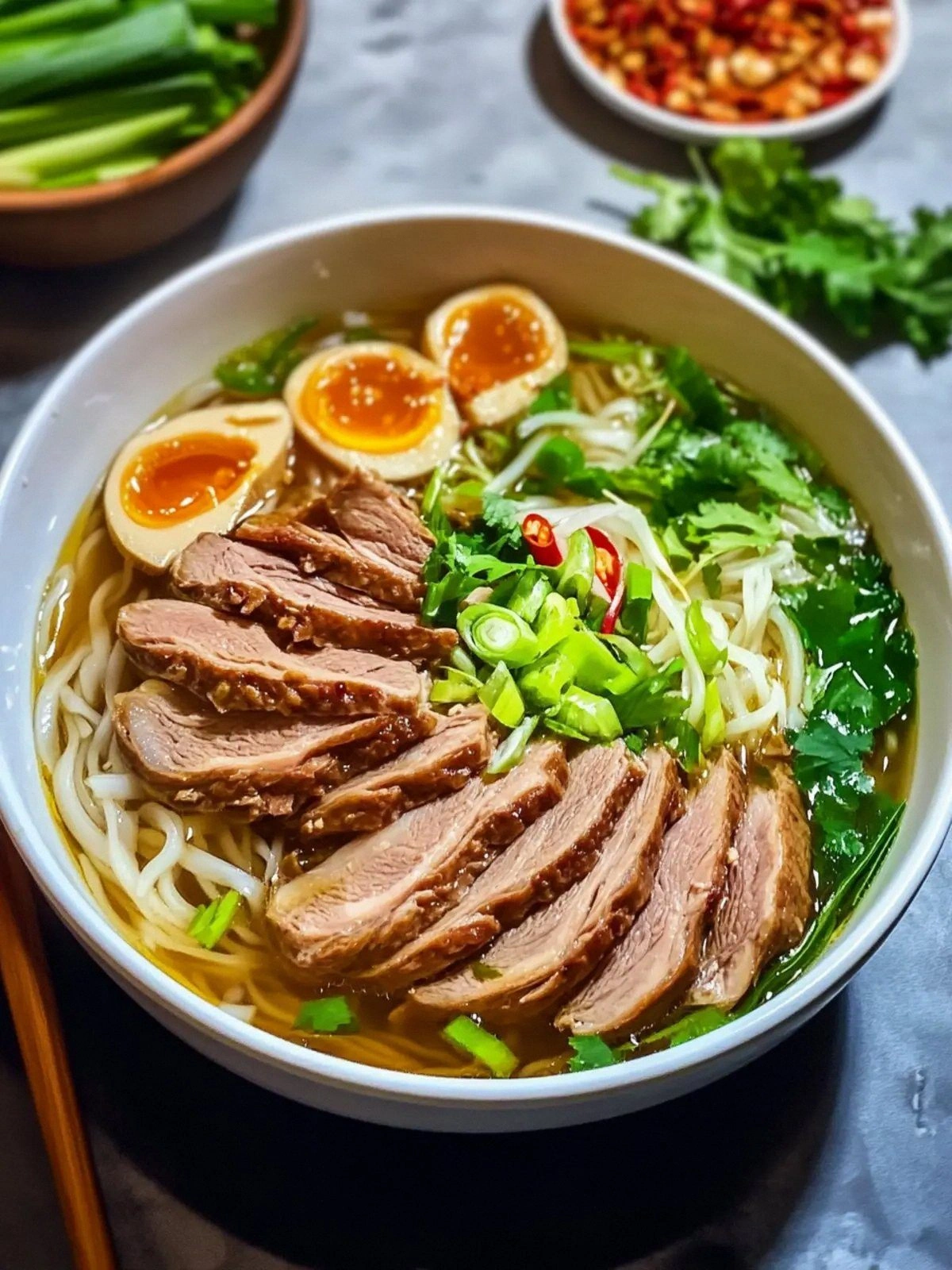
- Visual Appeal: The golden broth, pink duck slices, and translucent noodles create a bowl that looks as good as it tastes.
- Heart‑Healthy Option: By trimming excess fat from the duck, the dish becomes a lean protein powerhouse without sacrificing flavor.
Alright, let’s break down exactly what goes into this masterpiece...
Inside the Ingredient List
The Flavor Base
The backbone of any great Vietnamese soup is its flavor base, and in this recipe, it’s a symphony of aromatics. Lemongrass, with its citrusy zing, is bruised to release its oils and then sliced thinly so it can infuse the broth without overpowering. Ginger adds a peppery warmth that cuts through the duck’s richness, while a large shallot and onion provide a sweet, caramelized foundation once they’re sautéed to golden perfection.
If you skip any of these, the broth will feel flat—like a song missing its chorus. For instance, omitting ginger will leave the soup lacking depth, and skipping the shallot will reduce the natural sweetness that balances the savory duck. A good rule of thumb: treat the flavor base as the soul of the dish; every ingredient has a purpose.
Swap tip: If lemongrass is hard to find, a splash of fresh lime zest can mimic its bright note, but the texture will differ. For a smoky twist, add a small piece of charred ginger.
The Texture Crew
The texture crew includes the duck itself, the bamboo shoots, and the shiitake mushrooms. The duck is the star—choose a fresh, high‑quality piece and trim off the excess fat to keep the dish lean. Dried bamboo shoots, soaked and sliced, provide a crunchy bite that contrasts with the tender duck, while the shiitake mushrooms bring a meaty umami that deepens the broth’s complexity.
If you skip the bamboo shoots, you’ll lose that satisfying crunch that keeps the bowl interesting. Similarly, the shiitake mushrooms are key to achieving that “meaty” flavor profile typical of Vietnamese noodle soups. A good alternative to bamboo shoots is sliced carrots, but they will soften more quickly.
Buying tip: Look for bamboo shoots that are firm and free of mold—soft shoots can become mushy and lose their texture. For shiitake mushrooms, fresh ones are preferable, but dried mushrooms can be rehydrated for a more intense flavor.
The Unexpected Star
Lemon juice is the unexpected star that ties everything together. Added just before serving, it brightens the broth, cuts through the duck’s richness, and adds a subtle tang that lingers on the palate. This is a technique I learned from a street vendor in Hanoi, who would squeeze a fresh lime at the end of the cooking process.
If you omit the lemon, the soup will taste heavy and one‑dimensional. The acidity is what gives the dish its refreshing finish and prevents it from becoming cloying. A good alternative is a splash of rice vinegar, but it will alter the flavor profile slightly.
Buying tip: Choose lemons that feel heavy for their size and have a bright, fragrant aroma. Avoid lemons with soft spots or a waxy coating, which can reduce the juice’s brightness.
Everything's prepped? Good. Let's get into the real action...
The Method — Step by Step
- Start by heating a large stockpot over medium‑high heat and adding a splash of cooking oil. Once the oil shimmers, add the duck pieces and sear them until each side is a deep amber brown. This caramelization locks in flavor and gives the broth a subtle nutty undertone. Watch for the duck to release its juices—this is the moment the broth starts to develop depth.
- Remove the duck and set it aside. In the same pot, add the sliced lemongrass, ginger, shallot, and onion. Sauté until the aromatics are fragrant and the onions turn translucent. The scent should be so inviting that it makes your kitchen feel like a Vietnamese market. Keep stirring to prevent any burning.
- Add the 4 liters of water, bring to a boil, then reduce to a gentle simmer. Skim off any foam that rises to the surface; this keeps the broth clear and refined. Let the aromatics infuse the water for about 15 minutes—this is where the broth starts to develop its signature flavor.
- Add the bamboo shoots, shiitake mushrooms, and the previously seared duck back into the pot. Stir gently to combine. Simmer for another 30 minutes, or until the duck is fork‑tender and the mushrooms have released their umami. The broth should be rich and aromatic, with the duck pieces glistening.
- At this point, the soup is almost ready, but there’s a trick that can make or break the final dish. Carefully strain the broth through a fine mesh sieve into a clean pot, pressing the solids to extract every last drop of flavor. This step ensures a silky, cloud‑like broth that doesn’t have any gritty texture. Watch out: if you skip the straining, the broth will be cloudy and less refined.
- Return the strained broth to the stove and bring it to a gentle simmer. Add the fresh noodles (or pre‑cooked noodles if you’re in a hurry) and cook for 2–3 minutes until they’re al dente. The noodles should be firm yet tender, absorbing the broth’s flavors.
- Season the soup with salt to taste, a splash of cooking wine, and a generous squeeze of lemon juice. The lemon will brighten the broth, cutting through the duck’s richness. Stir gently, then taste and adjust as needed. If you want a deeper umami punch, add a drizzle of fish sauce.
- Plate the noodles in a bowl, top with the duck slices, and ladle the hot broth over them. Garnish with fresh herbs—cilantro, Thai basil, or mint—plus a sprinkle of crushed peanuts for crunch. The final touch is a drizzle of chili oil for those who like a kick.
- Serve immediately while the broth is steaming hot. The first spoonful should melt your worries away, leaving you craving the next. If you’re feeling adventurous, serve with a side of fresh lime wedges and sliced chilies for extra zing.
That’s it — you did it. But hold on, I've got a few more tricks that'll take this to another level.
Insider Tricks for Flawless Results
The Temperature Rule Nobody Follows
Many cooks think that a high heat will speed up flavor extraction, but that’s a myth. The key to a silky broth is a low, steady simmer that allows aromatics to release their oils slowly. Keep the heat between 180–190°F (82–88°C). A thermometer is a small investment that pays off with a richer, cleaner soup.
Why Your Nose Knows Best
If the broth smells like burnt onions, it’s time to lower the heat. Aromatic compounds are volatile and will scorch quickly if the pot is too hot. The right scent is a warm, fragrant bouquet that tells you the broth is developing its full character.
The 5-Minute Rest That Changes Everything
After simmering the duck, let the pot rest for 5 minutes before adding the noodles. This pause allows the flavors to settle and the duck to finish cooking gently, ensuring it remains tender. I’ve seen dishes where the duck turns rubbery because this step was skipped.
Use Fresh Herbs for a Burst of Color
Fresh herbs not only add brightness but also a pop of color that makes the dish Instagram‑worthy. Toss in chopped cilantro, Thai basil, and mint just before serving. They’ll release their oils and add a fresh, herbal note that balances the savory broth.
Keep the Noodles Al Dente
Overcooked noodles become mushy and lose their ability to hold the broth. Cook them in a separate pot with salted water, then drain and rinse under cold water to stop the cooking process. This technique keeps them firm and ready to soak up the flavorful broth.
Creative Twists and Variations
This recipe is a playground. Here are some of my favorite ways to switch things up:
Spicy Thai Twist
Add a tablespoon of Thai red curry paste during the aromatics stage and finish with a drizzle of chili oil. This gives the broth a bold, spicy depth that pairs wonderfully with the duck’s sweetness.
Herb‑Infused Marinade
Marinate the duck in a mixture of fish sauce, soy sauce, and crushed garlic for 30 minutes before searing. The herbs will penetrate the meat, making it more flavorful and tender.
Vegetarian Version
Replace the duck with tofu or tempeh, and add extra mushrooms for a meaty texture. The broth remains the same, preserving that authentic Vietnamese flavor profile.
Instant Pot Edition
Use the sauté function for aromatics, then pressure cook the broth and duck for 20 minutes. Quick, efficient, and still full of depth.
Gluten‑Free Noodle Swap
Use rice noodles or spiralized zucchini instead of traditional wheat noodles. The dish stays light and can accommodate dietary restrictions.
Breakfast Bowl
Serve the soup with a poached egg and a sprinkle of scallions for a hearty breakfast that starts your day with a burst of flavor.
Storing and Bringing It Back to Life
Fridge Storage
Cool the soup completely before transferring it to an airtight container. Store in the refrigerator for up to 3 days. The duck will keep its tenderness, and the broth will develop a deeper flavor as it sits.
Freezer Friendly
Divide the soup into single‑serving portions and freeze for up to 2 months. Thaw overnight in the refrigerator and reheat gently on the stove. This method preserves the texture of the duck and noodles.
Best Reheating Method
Reheat the soup over low heat, adding a splash of water if it appears too thick. Stir until the broth is heated through and the flavors meld. The small amount of water helps the soup regain its silky texture.