I remember the night I tried to impress my roommates with a fancy dinner and ended up with a kitchen that smelled like burnt toast and regret. The chicken thighs had gone dry, the sauce was a sticky mess, and the only thing left was a plate of disappointment. That disaster turned into a quest for the perfect sheet‑pan chicken, and after countless trials I landed on a version that has me shouting, “This is hands down the best version you'll ever make at home.” The secret? A bold pomegranate glaze that turns ordinary thighs into a showstopper, paired with a walnut relish that adds crunch and depth. If you’re ready to ditch the bland and embrace flavor that practically dances on your tongue, let me walk you through every single step — by the end, you’ll wonder how you ever made it any other way.
What Makes This Version Stand Out
- Flavor Explosion: The pomegranate glaze balances sweet, tart, and umami, creating a sauce that coats the chicken like velvet while leaving a caramelized crust.
- Texture Contrast: Crispy edges that shatter like thin ice contrast with a succulent interior, a result of the sheet‑pan technique and precise timing.
- Ingredient Integrity: Using fresh, high‑quality walnuts and real pomegranate juice ensures the dish tastes like a gourmet meal without the extra cost.
- Time Efficiency: Prep in 15 minutes, cook in 30, and the entire meal is ready in 45 — perfect for week‑night dinners.
- Versatility: Swap chicken for turkey or use a different fruit for the glaze; the core technique remains unchanged.
- Make‑Ahead Friendly: The glaze can be pre‑made and stored, and the chicken can be roasted ahead, making it a true crowd‑pleaser for gatherings.
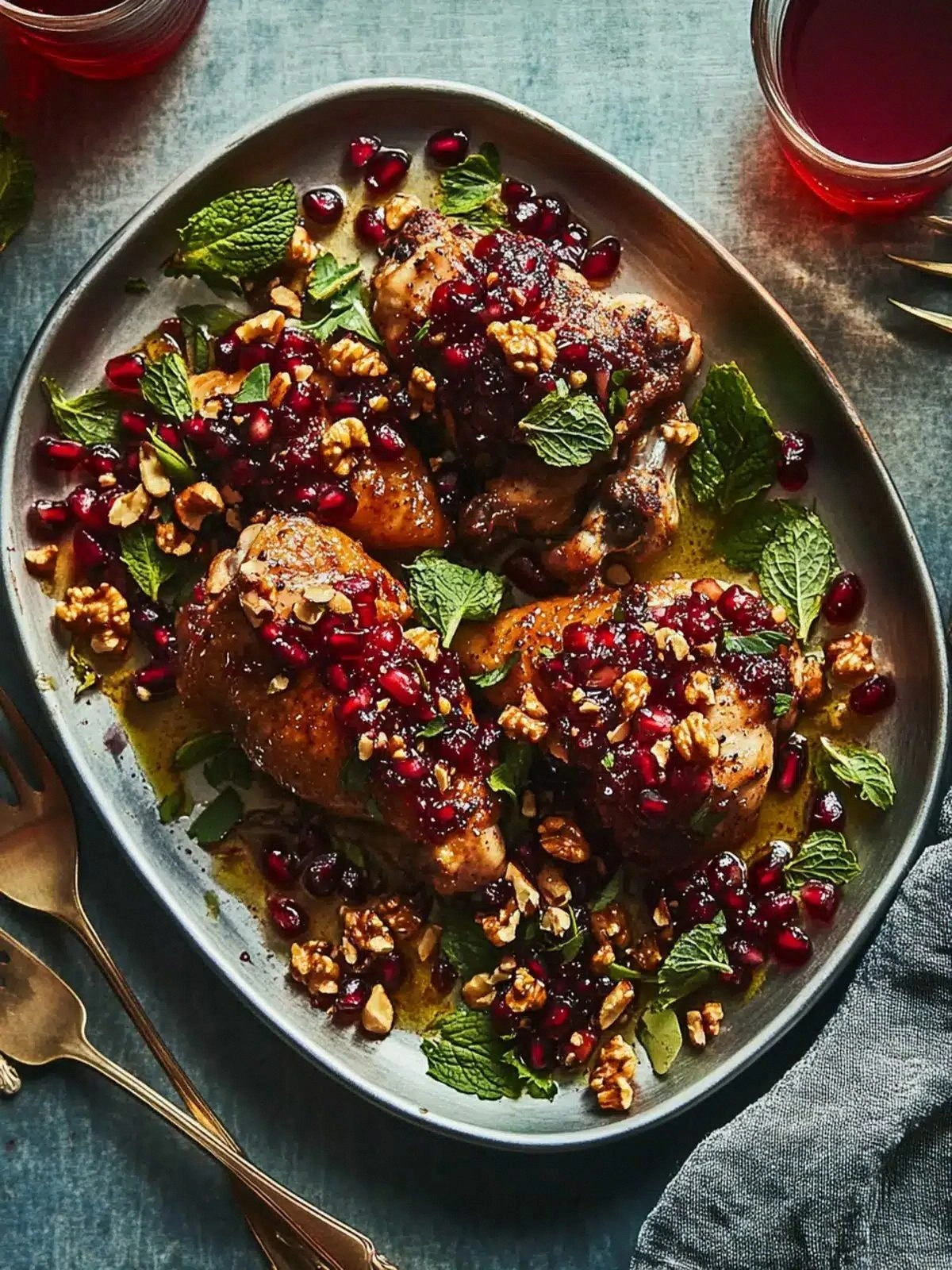
- Visual Appeal: The vibrant ruby glaze and scattered pomegranate seeds transform a simple sheet pan into a centerpiece that looks as good as it tastes.
Alright, let's break down exactly what goes into this masterpiece…
Inside the Ingredient List
The Flavor Base
The 0.5 teaspoon of kosher salt and freshly ground pepper are the unsung heroes that lift every other component. Salt draws out moisture, ensuring the meat stays juicy, while pepper adds a subtle bite that balances the sweetness of the pomegranate. Skipping this step will leave your dish flat and uninspired. If you’re low on salt, a pinch of sea salt or a dash of soy sauce can work, but don’t underestimate its importance.
The Sweet‑Savory Glaze
Combining balsamic vinegar, pomegranate juice, grenadine syrup, Worcestershire sauce, cumin, and crushed red pepper flakes creates a sauce that coats the chicken like a glossy coat of velvet. Each ingredient contributes a layer: balsamic brings acidity, pomegranate juice adds natural sweetness, grenadine deepens the color, Worcestershire offers umami, cumin gives warmth, and red pepper flakes provide a gentle heat. If you’re allergic to Worcestershire, tamari or soy sauce is a solid substitute, but keep the savory depth intact. Remember, the glaze must simmer until it reduces to a syrupy consistency before adding the chicken.
The Texture Crew
Walnuts, finely grated garlic, and pomegranate seeds form the crunchy, aromatic backbone of the dish. The walnuts are toasted until golden, releasing a buttery flavor that contrasts with the sweet glaze. Garlic adds a punch of depth, while the seeds give a pop of color and a burst of tartness when you bite. If you prefer a different crunch, almonds or pecans can replace walnuts, but the nutty profile will shift slightly. Always toast the nuts before mixing to avoid a raw, bitter taste.
The Final Flourish
Thinly sliced scallions on a diagonal are the finishing touch that adds freshness and a mild onion note. They’re sprinkled over the chicken after it comes out of the oven, creating a bright contrast against the deep ruby glaze. If you’re not a fan of scallions, a sprinkle of fresh parsley or cilantro will work, though the flavor profile will change. This step is where the dish truly feels complete, with a burst of green that signals freshness.
Everything's prepped? Good. Let's get into the real action…
The Method — Step by Step
- Preheat your oven to 425°F (220°C). While the oven heats, pat the chicken thighs dry with paper towels. This step is crucial; moisture on the surface will prevent a crisp, caramelized crust. I dare you to taste this and not go back for seconds once you see that golden edge.
- In a medium bowl, whisk together the balsamic vinegar, pomegranate juice, grenadine syrup, Worcestershire sauce, cumin, and crushed red pepper flakes. Stir until the mixture is smooth and the spices are fully incorporated. The aroma that rises will have you thinking you’re in a Mediterranean market.
- Pour the glaze into a small saucepan and bring to a gentle boil over medium heat. Reduce the heat to low and let it simmer, stirring occasionally, until it thickens to a syrupy consistency (about 8–10 minutes). Watch the color deepen; that’s a sign the sugars are caramelizing.
- While the glaze reduces, toast the walnuts in a dry skillet over medium heat until fragrant and lightly browned, about 4 minutes. Remove them from heat and let them cool; then chop roughly. The nutty aroma will mingle with the glaze once you combine them.
- Arrange the chicken thighs on a sheet pan lined with parchment paper, skin side up. Drizzle a tablespoon of olive oil over each piece, then season with salt and pepper. This simple step ensures the skin stays crisp and the flavors stay locked in.
- Transfer the sheet pan to the preheated oven and roast for 20 minutes. After 20 minutes, remove the pan and use a brush to coat each thigh with the reduced glaze. The glaze should cling like a glossy coat, ready to caramelize.
- Return the pan to the oven and roast for an additional 10 minutes, or until the internal temperature reaches 165°F (74°C). The edges should pull away from the pan, indicating perfect caramelization. This is the moment of truth; the sizzle when the glaze hits the pan? Absolute perfection.
- Once cooked, remove the chicken from the oven and let it rest for 5 minutes. Sprinkle the chopped walnuts, grated garlic, pomegranate seeds, and scallion slices over the top. The rest period allows the juices to redistribute, keeping the meat moist and flavorful.
- Serve immediately with a side of couscous or roasted vegetables. The vibrant colors and complex flavors will make any dinner feel like a celebration. If you’re still hungry, I’ll be honest — I ate half the batch before anyone else got to try it.
That's it — you did it. But hold on, I've got a few more tricks that'll take this to another level…
Insider Tricks for Flawless Results
The Temperature Rule Nobody Follows
Many cooks roast at 400°F, but 425°F gives that extra crispness on the skin while keeping the interior moist. The higher heat causes the Maillard reaction to happen faster, creating a caramelized crust that’s both flavorful and visually stunning. I’ve seen people get a soggy result because they under‑baked; trust me, the extra 25°F makes all the difference.
Why Your Nose Knows Best
During the glaze reduction, keep your nose close to the pan. The aroma will shift from sweet to nutty as the sugars caramelize. When you smell a hint of toasted walnuts, that’s the cue to take it off the stove. This olfactory checkpoint is a secret trick I learned from a chef who said, “Your nose is the best thermometer.”
The 5‑Minute Rest That Changes Everything
Letting the chicken rest after roasting allows the juices to redistribute. Cutting into it too soon will cause the juices to spill out, leaving the meat dry. I’ve had a few friends try skipping this step, and the result was a sad, crumbly mess. Give it that five‑minute grace period and taste the difference.
The Walnut Toasting Technique
Toast walnuts in a dry skillet over medium heat, stirring frequently to prevent burning. Once they’re golden and fragrant, transfer them to a paper towel to cool. This simple step unlocks a deep, buttery flavor that elevates the entire dish. If you skip it, the walnuts will taste raw and flat.
The Scallion Slice Trick
Slice scallions at a diagonal to create a large surface area, allowing the flavor to spread evenly across the chicken. The thin slices also add a subtle crunch that balances the soft glaze. If you’re using pre‑sliced scallions, make sure they’re fresh; otherwise, they’ll lose their bite.
Creative Twists and Variations
This recipe is a playground. Here are some of my favorite ways to switch things up:
Mediterranean Twist
Swap the pomegranate glaze for a sun‑dried tomato and olive sauce. Add chopped kalamata olives for a briny punch. This version pairs beautifully with a side of Greek salad.
Spicy Korean Flair
Replace the Worcestershire sauce with gochujang and add a splash of sesame oil. Garnish with toasted sesame seeds and sliced green onions. The heat from the gochujang gives a fiery kick that’s hard to resist.
Sweet Apple Variation
Use apple cider vinegar instead of balsamic and add diced apples to the glaze. The apple adds a subtle sweetness that complements the pomegranate notes. Serve with roasted sweet potatoes for a balanced meal.
Vegan Version
Replace the chicken with thick slices of marinated tofu or tempeh. Use a plant‑based Worcestershire alternative. The glaze still caramelizes, giving a satisfying texture and flavor.
Herb‑Infused Delight
Add fresh rosemary or thyme to the glaze for a fragrant herbaceous note. The herbs pair wonderfully with the nutty walnut relish. This variation is perfect for a rustic dinner party.
Storing and Bringing It Back to Life
Fridge Storage
Cool the chicken completely, then store in an airtight container in the refrigerator for up to 3 days. The glaze will thicken slightly, so reheat gently to restore its sheen.
Freezer Friendly
Wrap each thigh tightly in plastic wrap and place in a freezer bag. Freeze for up to 2 months. Thaw overnight in the fridge before reheating.
Best Reheating Method
Reheat in a 350°F oven for 10 minutes, adding a splash of water to keep the meat moist. Alternatively, finish on the stovetop with a little broth for a quick, flavorful result. The tiny splash of water steams the chicken back to perfection.