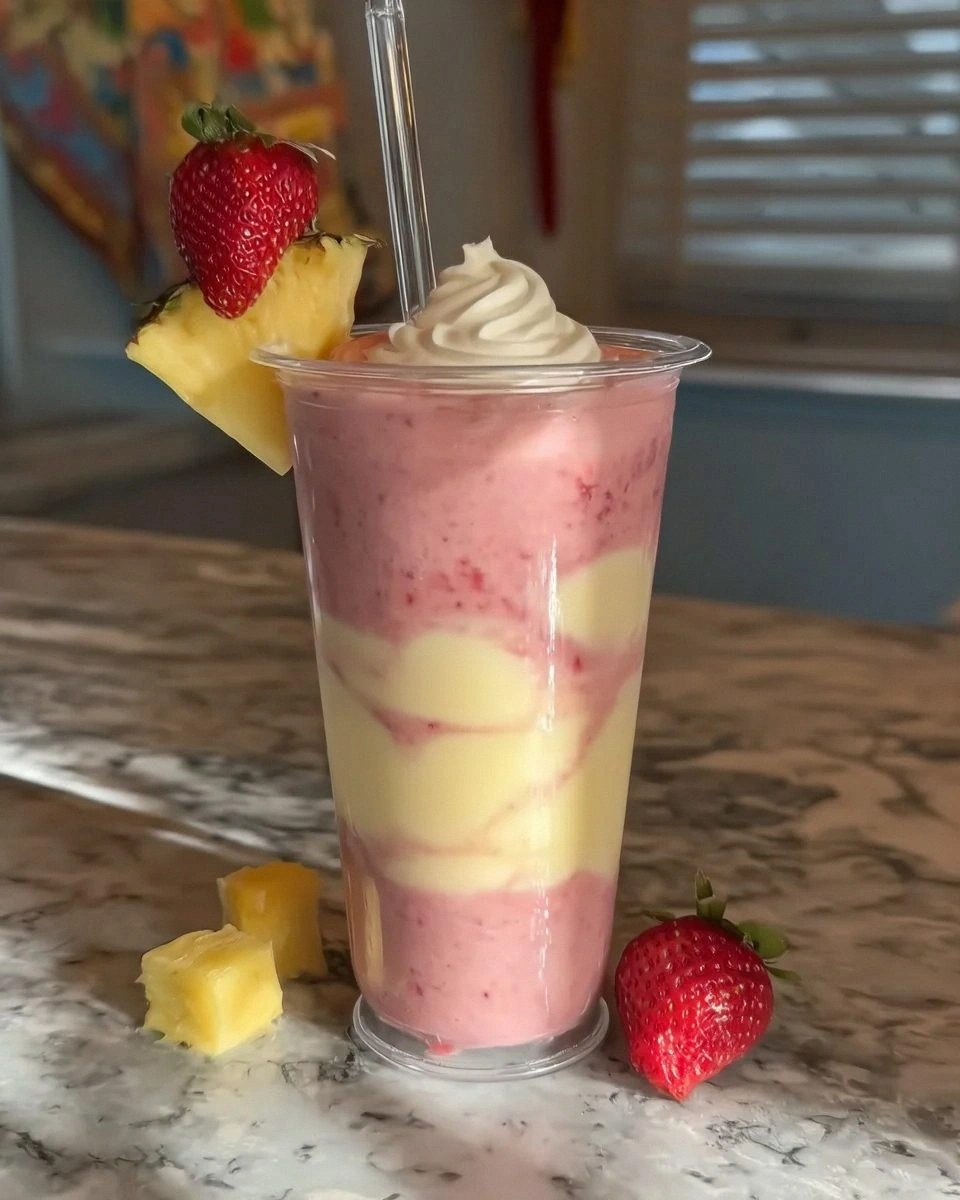
I still remember the day I accidentally created the most ridiculously addictive smoothie of my life. It was one of those sweltering afternoons when the air felt like soup and even the dog refused to move from the bathroom's cool tile floor. My blender sat on the counter like a challenge, strawberries sweating in their container, a lone can of coconut milk winking at me from the pantry. In my heat-addled brain, combining strawberry pina colada flavors seemed either brilliant or certifiably insane. Spoiler alert: it was brilliant. The first sip tasted like someone had liquefied a tropical vacation and folded in the essence of peak summer berries. I stood there in my kitchen, barefoot and slightly sunburned, thinking I'd either discovered liquid gold or just ruined three perfectly good ingredients forever. Turns out, it was the former.
Here's the thing about most strawberry pina colada smoothies you'll find online—they're either cloyingly sweet sugar bombs that make your teeth ache, or they're watery disappointments that taste like someone waved a coconut-scented candle over diluted berry juice. My version? It's the Goldilocks moment of smoothies. The coconut doesn't bully the strawberries; instead, they dance together like they've been practicing for years. The texture hits that perfect middle ground between milkshake-thick and juice-bar-thin, coating your tongue just enough to make the flavors linger without feeling heavy. Every sip delivers that first-day-of-summer feeling, even when you're drinking it in February while wearing three sweaters.
What started as a desperate attempt to cool down has become my most-requested recipe, the thing friends text me about at midnight, the drink my neighbor's kids will actually eat vegetables to earn. I've made this smoothie for beach picnics and winter brunches, for post-workout recovery and pre-wedding celebrations. It works everywhere, every time, like that perfect white T-shirt you can dress up or down. The secret isn't some impossible-to-find superfood powder or a $400 blender (though hey, if you've got one, I'm jealous). Nope, the magic lives in three simple techniques that most recipes completely skip, plus one ingredient that sounds weird until you taste what it does to the final flavor.
Let me walk you through every single step — by the end, you'll wonder how you ever made it any other way.
What Makes This Version Stand Out
Tropical Balance: Most versions drown the strawberries in coconut until you're basically drinking sunscreen. This recipe uses a precise 2:1 ratio that lets both fruits shine, creating a flavor that's recognizably strawberry-forward with coconut as the smooth backup singer rather than the screaming lead vocalist.
Texture Alchemy: Instead of using ice that waters everything down, we're freezing the fruit itself and adding just enough liquid to create a texture that's spoon-thick at first, then melts into silk as it warms slightly. It's like the difference between snow and shaved ice — same temperature, completely different experience.
No Sugar Needed: Here's where I get a little controversial — I don't add any sweeteners. None. The secret is using strawberries at peak ripeness (they should smell like candy when you open the container) and a tiny pinch of salt that makes the natural sugars sing louder than any honey or agave ever could.
Make-Ahead Magic: You can prep individual smoothie packs on Sunday and have breakfast for the week that takes literally 30 seconds to blitz together. I'm talking pre-frozen fruit portions in freezer bags, ready to dump and blend when you're running late but refuse to skip breakfast again.
Protein Without Powder: Instead of that chalky protein powder that makes smoothies taste like a science experiment, we're using Greek yogurt for creaminess and staying power. The tang plays beautifully with sweet fruit, and suddenly your "treat" smoothie keeps you full until lunch.
Blender-Friendly: Whether you're rocking a high-speed beauty or a basic model that sounds like a jet taking off, this recipe works. No fancy settings required, no stopping to scrape down sides every five seconds, no burning out the motor on frozen chunks.
Alright, let's break down exactly what goes into this masterpiece...
Inside the Ingredient List
The Flavor Base
Strawberries are the star here, but not just any sad winter berries that taste like disappointment. You want the ones that practically glow red, that release their perfume the second you walk past them at the market. When you taste a really good strawberry, it should hit you with layers — bright acid, deep berry notes, and a sweetness that makes you close your eyes involuntarily. If your berries don't make you make embarrassing food noises, keep looking. The coconut milk needs to be full-fat and canned, none of that watery carton stuff that tastes like someone described coconut to a chemist. We're after that rich, almost velvety texture that makes this feel like dessert, plus the fat helps your body absorb all those strawberry nutrients.
The Texture Crew
Greek yogurt is my secret weapon for smoothie texture that doesn't quit. It thickens everything without making it heavy, adds protein that keeps you satisfied, and brings this subtle tang that makes the whole drink taste more complex than it has any right to be. Don't go for fat-free here — 2% gives you that luxurious mouthfeel while still keeping things light enough for a hot day. The banana in this recipe isn't for flavor (though it helps); it's the natural emulsifier that keeps everything smooth and prevents separation. Use one that's just starting to get spotty — still starchy enough to thicken, sweet enough to avoid added sugar.
The Unexpected Star
Here's where I might lose some of you, but stay with me — we're adding a pinch of cardamom. Not enough to identify it, just enough to make people ask "what is that?" in the best possible way. It bridges the gap between strawberry and coconut like a flavor diplomat, adding warmth that makes the whole thing taste more expensive than it is. If you absolutely can't find cardamom, a tiny pinch of cinnamon works too, but cardamom is the real MVP here.
The Final Flourish
Lime juice is non-negotiable. Just a squeeze wakes up all the other flavors like a tiny citrus alarm clock. We're talking maybe half a teaspoon — enough to brighten without turning this into a key lime pie situation. The acid also helps keep the color vibrant, so your smoothie stays Instagram-worthy instead of turning that sad brown-pink that screams "I've been sitting here oxidizing for an hour."
Everything's prepped? Good. Let's get into the real action...
The Method — Step by Step
- Start with your blender on the counter, not tucked away in some cabinet where you have to perform gymnastics to reach it. I keep mine out because if I have to dig for it, I'll convince myself I'm not that hungry and skip breakfast. Add the Greek yogurt first — always start with your thickest ingredient. This creates a base that everything else can grab onto, preventing that dreaded air pocket where the blades spin but nothing moves. You want about half a cup, which looks sad and lonely at the bottom but trust me, this is the foundation of your smoothie empire.
- Now for the frozen strawberries, and here's where precision matters. You need exactly one cup, which is roughly eight large berries or twelve smaller ones. If you go over, the coconut flavor gets lost; under and it tastes like you're drinking coconut milk through a strawberry-flavored straw. The berries should be rock hard — if they're even slightly soft, they'll water down your texture. I buy them fresh when they're cheap, wash and hull them, then freeze in a single layer on a baking sheet before bagging. This prevents the dreaded clump that no blender can conquer.
- Time for the coconut milk, and I'm going to get specific here. Shake your can vigorously before opening — that thick cream at the top needs to emulsify with the watery liquid underneath. Measure out a quarter cup, which seems stingy but remember we're after flavor balance, not coconut soup. If you're using homemade coconut milk cubes (and you should be), use three standard ice-cube-sized portions. They'll blend smoother and colder than liquid coconut milk, giving you that milkshake texture without any dilution.
- Here's where most people mess up — they add everything at once and wonder why their smoothie separates faster than oil and vinegar. We're adding just half the frozen strawberries now, plus the banana (broken into chunks), yogurt, coconut milk, cardamom, and lime juice. Put the lid on and blend on low for exactly twenty seconds. This creates your emulsion base, binding the yogurt and coconut into a smooth foundation that will hold everything together later.
- Stop the blender and add the remaining strawberries. This is the moment of truth — you're going to pulse, not blend continuously. Five quick pulses, then check the texture. It should be thick enough that you wonder if it's going to pour, but smooth enough that you can't see any strawberry chunks. If it's too thick, add coconut water a tablespoon at a time. Too thin? Another frozen strawberry or two. The pulsing prevents over-blending, which heats up your smoothie and kills that fresh flavor.
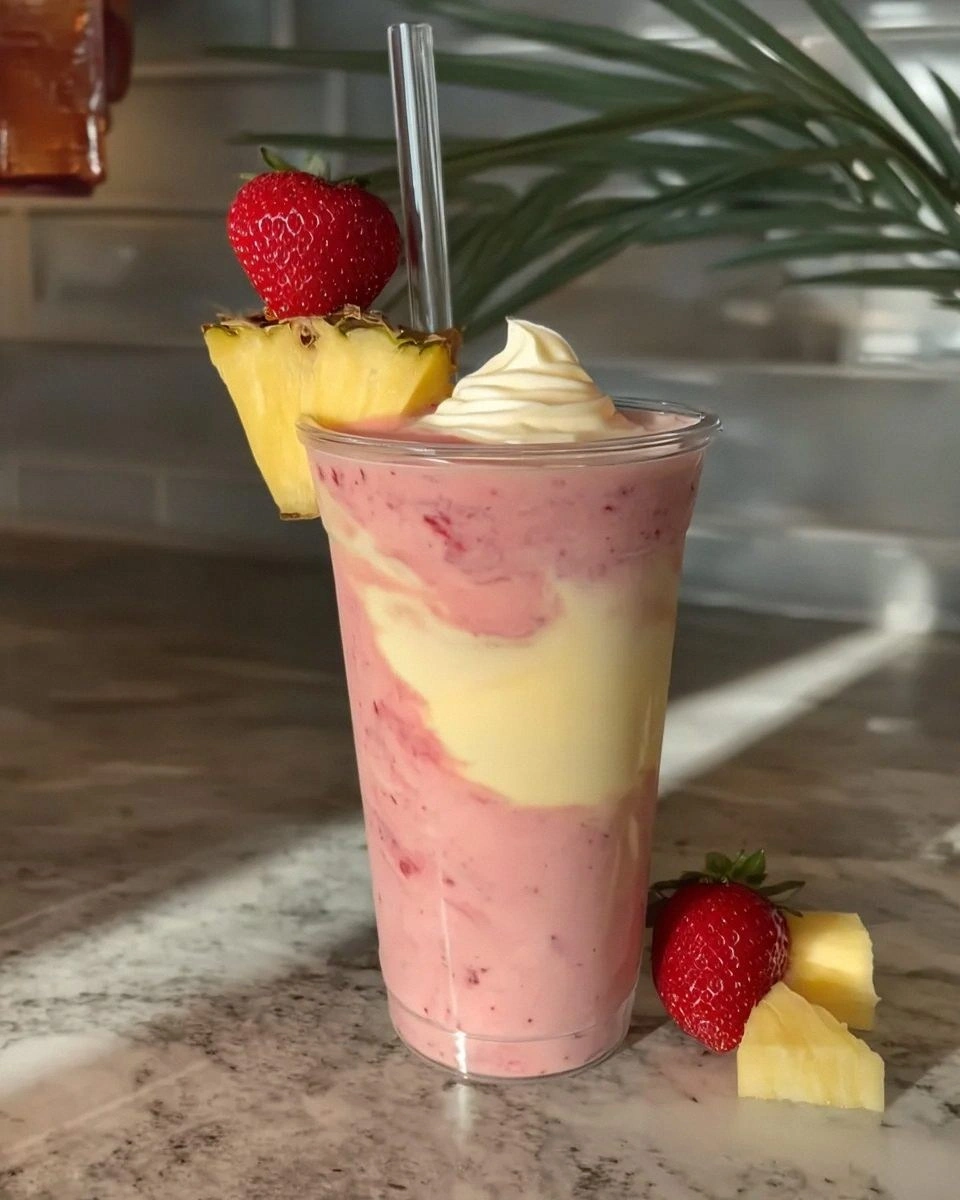
- Now for the part that separates good smoothies from legendary ones — the texture test. Turn off the blender completely and wait ten seconds. A perfect smoothie will hold its swirled pattern on top, not immediately flatten out. It should mound slightly when you spoon some up, then slowly relax back into the glass. If it's still too liquid, blend in one more frozen strawberry. If it's so thick your spoon stands up in it, add a teaspoon of coconut water and pulse once.
- Pour immediately into a chilled glass — I keep mine in the freezer for exactly this reason. The cold glass maintains that perfect thick texture while you drink it. If you're feeling fancy, rim the glass with a little shredded coconut first, just run a lime wedge around the rim and dip it in coconut. It adds nothing to the flavor but makes you feel like you're on vacation, which is sometimes exactly what Monday morning needs.
- Here's the final touch that nobody expects — wait exactly two minutes before drinking. I know, I know, you've been patient this long, but those two minutes let the flavors meld and the temperature even out. The first sip will hit you with bright strawberry, then the coconut rolls in like a wave, and finally that whisper of cardamom appears at the end like a plot twist you didn't see coming but can't imagine the story without.
That's it — you did it. But hold on, I've got a few more tricks that'll take this to another level...
Insider Tricks for Flawless Results
The Temperature Rule Nobody Follows
Here's the thing about smoothie temperature — it's not just about being cold. You want everything, including your bowl or glass, to be the same temperature. I keep my strawberries frozen solid, my coconut milk as cubes, and my glass in the freezer. But here's the twist: let your yogurt sit out for exactly five minutes before blending. Ice-cold yogurt straight from the fridge can seize up when it hits the frozen fruit, creating little white flecks that never quite blend in. Five minutes takes the edge off without warming it enough to affect the final temperature. Your smoothie will be silkier than anything you've made before.
Why Your Nose Knows Best
Before you even start blending, smell your strawberries. No, really smell them. They should hit you with a wave of perfume that makes your mouth water. If they don't, stop right there and find better berries. But here's the part nobody tells you — smell your coconut milk too. Good coconut milk should smell like you just cracked open a fresh coconut on a beach somewhere, not like sunscreen. If it smells metallic or overly processed, your smoothie will taste flat no matter how perfect your technique is. I once made this with a fancy organic brand that smelled like a candle store, and the whole thing tasted like drinking a spa.
The 5-Minute Rest That Changes Everything
Okay, ready for the game-changer? After you blend everything smooth, let the smoothie rest in the blender cup for exactly five minutes before pouring. During this time, something magical happens — the air bubbles rise and pop, the temperature equalizes, and the flavors have a chance to meld. It's like letting a good stew rest, but in smoothie form. The texture becomes impossibly smooth, and those individual flavors you worked so hard to balance actually taste like one cohesive thing rather than a strawberry smoothie that happens to have coconut in it. I've had people ask if I added something special on days I do this versus days I don't.
The Order That Prevents Separation
Most smoothies separate because people add ingredients in the wrong order. You want to create an emulsion, like making mayonnaise, but nobody tells you this. Start with your binder (yogurt), add your fat (coconut milk), then your fruit in order of hardness (banana first, then frozen strawberries). This creates a stable base that holds everything together. Adding everything at once is like trying to make vinaigrette by dumping oil and vinegar in a jar and shaking once — technically it works, but it's not going to stay together.
The Blender Speed Secret
High-speed blenders have ruined us — we think everything needs to be pulverized at maximum power. But here's what actually works: start on your lowest setting for 15 seconds to break everything down, then medium for 10 seconds to smooth it out, then blast it on high for exactly 5 seconds at the end. This creates layers of texture rather than one homogenized puree. The low speed keeps things cold, medium incorporates air, and high gives you that final polish. My smoothie-hating husband actually likes this version because it has texture interest rather than tasting like baby food.
Creative Twists and Variations
This recipe is a playground. Here are some of my favorite ways to switch things up:
The Green Goddess Version
Add a handful of fresh spinach and a teaspoon of spirulina powder. The spinach disappears flavor-wise but adds nutrients and a gorgeous green color that makes you feel virtuous. The spirulina gives it a slight ocean-y note that plays beautifully with the coconut, making the whole thing taste like you're drinking something expensive from a juice bar. My kids call this the "mermaid smoothie" and will actually request it, which is how I know it's good.
The Dessert for Breakfast Option
Swap the Greek yogurt for frozen vanilla yogurt and add a tablespoon of cream cheese. This creates something that tastes like strawberry cheesecake in smoothie form — rich, tangy, and indulgent enough that you feel like you're getting away with something. Add a few graham cracker crumbs on top for crunch, and suddenly breakfast feels like dessert without the sugar crash.
The Tropical Heat Wave
Add a quarter teaspoon of cayenne and swap the cardamom for fresh grated ginger. The heat builds slowly, hitting you at the end of each sip, while the ginger makes everything taste fresher and more alive. It's like a tropical vacation that ends with a little spice kick, perfect for those mornings when you need something to wake you up but coffee isn't cutting it.
The Protein Powerhouse
Add two tablespoons of almond butter and a scoop of collagen peptides. The almond butter gives you healthy fats and makes it taste like a peanut butter and jelly sandwich in smoothie form, while the collagen dissolves completely without affecting texture. This version keeps me full until dinner on days when lunch just isn't happening.
The Mocktail Makeover
Replace half the coconut milk with coconut water, add a splash of pineapple juice, and rim your glass with toasted coconut flakes. Serve it in a fancy glass with a tiny umbrella, and suddenly it's a vacation drink that won't get you fired if you have it at lunch. I've served this at brunch parties and watched people go back for thirds, completely forgetting it's actually good for them.
The Chocolate-Covered Strawberry
Add a tablespoon of raw cacao powder and a teaspoon of vanilla extract. The chocolate deepens the strawberry flavor without making it taste like a chocolate smoothie, creating this sophisticated flavor that tastes like expensive truffles. It's breakfast that feels like dessert, but the cacao gives you a gentle energy lift that lasts for hours without the crash.
Storing and Bringing It Back to Life
Fridge Storage
Okay, real talk — smoothies are best fresh. But if you must store it (say, you're meal prepping or got distracted by a work call), pour it into an airtight container, filling it as close to the top as possible to minimize air exposure. It'll keep for about 24 hours in the fridge, but here's the key: give it a good shake before drinking. It might separate a bit, but the flavors actually intensify overnight. Just don't expect that perfect texture — it'll be more like a really good juice than a smoothie. I keep a few of these in the fridge for afternoons when I need something quick but don't want to wake the baby with the blender.
Freezer Friendly
Here's where it gets interesting — you can freeze this smoothie, but not how you think. Pour it into popsicle molds and you've got breakfast you can eat while walking the dog. Or freeze it in ice cube trays, then blend those cubes with a splash of coconut water for an instant smoothie that's actually better than fresh. The freezing process concentrates the flavors, so it's like smoothie concentrate. I've also frozen it in muffin tins, then popped out a few "smoothie pucks" into a glass to thaw while I'm getting ready. By the time I've found my keys, it's perfectly slushy and ready to drink.
Best Reheating Method
Reheating a smoothie sounds wrong, but sometimes you make too much and it's too thick after being in the fridge. The trick is to add it back to the blender with a splash of something cold — coconut water, almond milk, even cold water works. Blend for just 5 seconds to re-emulsify everything. Microwaving is a hard no — it cooks the fruit and creates that weird grainy texture that makes you question all your life choices. If it's too thick, thin it with liquid. If it's too thin, add a frozen banana chunk. The blender resets everything back to that perfect middle ground.