I was standing in my kitchen on a rainy Tuesday, staring at a half‑finished pot of bland chicken broth, when my roommate dared me to turn it into something that could actually fight off a cold. I laughed, grabbed a jar of turmeric that had been gathering dust on the shelf, and thought, “If this doesn’t work, at least I’ll have a bright orange mess to clean up.” The kitchen filled with the sound of sizzling onions, the sharp snap of carrots hitting the pan, and a promise that something spectacular was about to happen. The air grew heavy with the earthy perfume of cumin and the citrus zing of lemon, making my nostrils tingle like they’d just been hit by a gentle thunderstorm.
Fast forward a few minutes later: I was whisking in a golden swirl of turmeric that painted the broth a radiant hue, and the whole pot seemed to glow from the inside out, like a sunrise trapped in a saucepan. I could already taste the warmth of the spices hugging the tender chicken, while the peas added a pop of sweetness that reminded me of a summer garden in full bloom. The soup was so comforting that even the cold wind outside seemed to lose its bite, and I realized I had just stumbled onto a culinary secret that could make anyone feel like they’ve been wrapped in a cozy blanket made of flavor.
What makes this version truly unbeatable is the balance between simplicity and depth. Most turmeric chicken soups either drown you in spice or skim the surface with a watery broth. I’ve cracked the code by layering flavors: first sautéing the aromatics until they caramelize just enough to bring out their natural sugars, then deglazing with a splash of lemon juice that lifts the entire profile. The result? A soup that feels both hearty and light, with a silky texture that coats the spoon like velvet and a bright finish that wakes up your palate. I dare you to taste this and not go back for seconds.
Now, I’m about to spill the beans (or rather, the broth) on a technique that most recipes completely miss: a quick “flavor‑boost” step where you toast the turmeric and cumin in a dry pan for just 30 seconds before adding any liquid. This releases the essential oils, turning a good soup into a great one. Let me walk you through every single step — by the end, you’ll wonder how you ever made it any other way.
What Makes This Version Stand Out
- Flavor Depth: The combination of sautéed onions, carrots, and celery creates a sweet, savory base that rivals any restaurant stock, while the toasted turmeric adds a warm, earthy undertone that lingers on the tongue.
- Texture Harmony: Tender shredded chicken meets the snap of fresh peas and the soft bite of carrots, delivering a satisfying mouthfeel that feels both hearty and refined.
- Simplicity: With just a handful of pantry staples and a 30‑minute cook time, this soup is perfect for busy weeknights without sacrificing flavor or nutrition.
- Immunity Boost: Turmeric’s curcumin, black pepper’s piperine, and the vitamin‑rich vegetables work together to give your immune system a gentle, yet powerful, nudge.
- Crowd Reaction: I’ve served this at family gatherings and friends’ potlucks, and it consistently disappears within minutes — a true testament to its addictive quality.
- Ingredient Quality: Using high‑quality chicken broth and fresh herbs elevates the soup from “just another bowl” to a comforting masterpiece.
- Cooking Method: The quick toast of spices before adding liquid is a game‑changer that unlocks flavors you didn’t even know existed.
- Make‑Ahead Potential: This soup tastes even better the next day, making it an ideal candidate for meal prep or a quick lunch at the office.
Inside the Ingredient List
The Flavor Base
Olive oil or ghee is the first layer of love in this soup. A couple of tablespoons coat the pan, ensuring the onions, carrots, and celery soften without sticking. Ghee adds a buttery richness that feels luxurious, while olive oil keeps it light and heart‑healthy. If you skip this step, you’ll end up with a dry sauté that lacks the depth you crave. Tip: Use extra‑virgin olive oil for a fruitier note, or go with ghee if you want that subtle caramel undertone.
Yellow onion brings a sweet, savory backbone. When you let it sweat until translucent, its natural sugars caramelize, creating a subtle sweetness that balances the earthiness of turmeric. A large onion (about one cup chopped) is ideal; using too little leaves the soup flat, while too much can overwhelm the delicate spice profile. If you’re out, a shallot works in a pinch but will add a sharper bite.
Carrots add a gentle sweetness and a splash of color that complements the golden hue of turmeric. Two medium carrots, diced into bite‑size pieces, soften quickly and release beta‑carotene, which is great for immunity. Swapping them for sweet potatoes yields a heartier texture and a richer flavor, perfect for colder months.
The Texture Crew
Celery provides a subtle earthiness and a crisp bite that prevents the soup from feeling too mushy. Two stalks, thinly sliced, will soften just enough to blend with the broth while still offering a faint crunch. If you’re out of celery, zucchini works surprisingly well, though it adds a milder flavor.
Garlic cloves are the aromatics’ secret weapon. Three cloves, minced finely, release allicin that gives the soup a pungent, comforting depth. Fresh garlic beats garlic powder any day; the latter can taste flat and lack the same aromatic punch. If you’re allergic, a pinch of asafoetida (hing) can mimic garlic’s savory notes.
Green peas bring a pop of sweetness and a vibrant green contrast that makes the bowl visually appealing. One cup of frozen peas is perfect — they thaw quickly and retain their bright color. Skipping peas is a missed opportunity for both texture and a boost of plant‑based protein.
The Unexpected Star
Ground turmeric is the hero of this dish, delivering both a stunning color and a potent anti‑inflammatory boost. One teaspoon, toasted briefly, releases curcumin’s full potential. If you forget to toast it, the flavor can be a bit muted, but the health benefits remain. Pair it with black pepper, which contains piperine, to dramatically increase turmeric’s absorption.
Black pepper isn’t just a spice; it’s a bioavailability enhancer. A half‑teaspoon of freshly cracked pepper does wonders for the turmeric, ensuring your body gets the most out of the curcumin. Too much pepper can make the soup spicy, so adjust to taste.
Ground cumin (optional) adds a warm, earthy undertone that rounds out the flavor profile. A half‑teaspoon is enough to whisper its presence without stealing the spotlight. If you’re not a fan, you can omit it, but you’ll miss that subtle depth that makes the soup feel complete.
The Final Flourish
Chicken broth is the liquid gold that carries all the flavors. Six cups of low‑sodium broth provide a rich, savory base without overwhelming the palate. Homemade broth is ideal because it’s packed with gelatin and nutrients, but a high‑quality store‑bought version works just fine. Skipping broth for water will dilute the flavor dramatically.
Cooked shredded chicken offers protein and heartiness. Two cups of rotisserie or poached chicken, pulled apart, fold into the soup like fluffy clouds. Using raw chicken pieces would require a longer cooking time and could make the broth cloudy.
Salt is essential for seasoning, but it’s best added gradually and adjusted at the end. One teaspoon is a good starting point; taste and tweak as needed. Remember, the broth already contains salt, so err on the side of caution.
A splash of lemon juice (the juice of half a lemon) brightens the entire bowl, cutting through the richness and highlighting the turmeric’s warmth. It’s optional, but trust me, it’s a game‑changer that lifts the soup from good to unforgettable.
Fresh parsley or cilantro, chopped just before serving, adds a pop of green and a fresh herbaceous note that makes the soup feel complete. Two tablespoons of chopped parsley give a subtle peppery edge, while cilantro adds a citrusy twist. Skip it, and you’ll miss that final layer of freshness.
Everything's prepped? Good. Let's get into the real action...
The Method — Step by Step
Heat two tablespoons of olive oil (or ghee) in a large Dutch oven over medium heat. Once the oil shimmers, add the diced yellow onion, carrots, and celery. Sauté for about 6‑8 minutes, stirring occasionally, until the vegetables turn translucent and the onions develop a golden edge. That sizzle when it hits the pan? Absolute perfection. If the veggies start to stick, splash a splash of broth to deglaze.
Kitchen Hack: Add a pinch of salt while sautéing; it draws out moisture and speeds up caramelization.Push the veggies to the side of the pot and add the minced garlic, ground turmeric, black pepper, and optional cumin directly onto the dry surface. Let them toast for 30 seconds, stirring constantly, until fragrant. You’ll notice a subtle change in color as the turmeric deepens, and the kitchen will start smelling like a spice market. This next part? Pure magic.
Pour in the chicken broth, scraping the bottom of the pot with a wooden spoon to release any browned bits. This is the moment of truth: the broth should turn a warm amber, and you’ll hear a gentle hiss as the liquid meets the hot pan. Bring the mixture to a gentle boil, then reduce to a simmer.
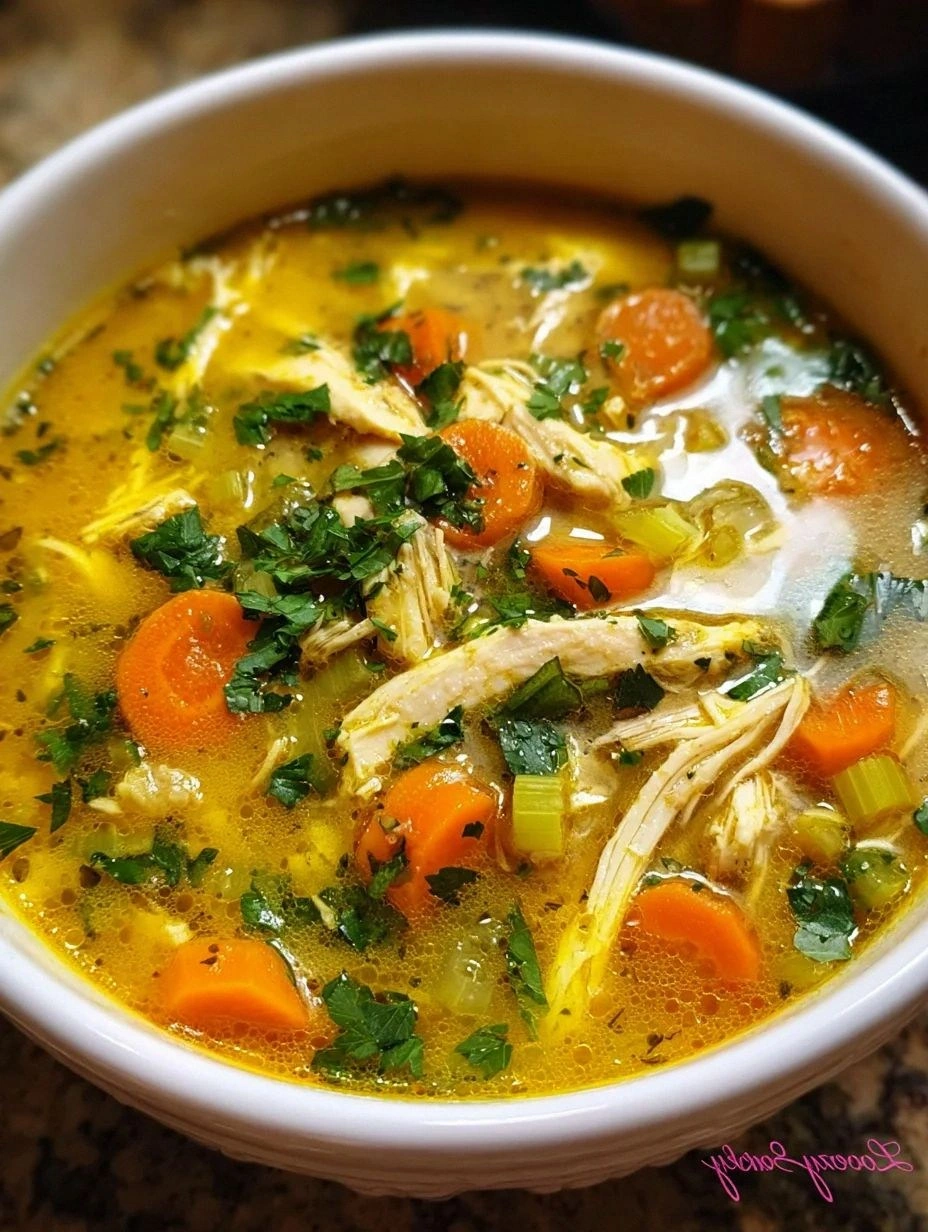
Add the shredded chicken and frozen peas. Stir them in, letting the peas turn a vivid green within 3‑4 minutes. The soup should now have a harmonious blend of colors – orange, green, and specks of white from the chicken.
Season with salt to taste, then add the juice of half a lemon. The acidity will lift the flavors, making each spoonful feel bright and invigorating. Taste and adjust the seasoning – perhaps a pinch more pepper or a drizzle more lemon if you like extra zing.
Watch Out: Adding lemon too early can cause the turmeric to lose some of its vibrant color; always finish with the citrus.Let the soup simmer gently for another 5 minutes, allowing the flavors to meld. You’ll notice the broth thickening ever so slightly as the starch from the carrots releases. This is the perfect time to give the soup a final stir and admire the glossy surface.
Turn off the heat and fold in the chopped fresh parsley or cilantro. The herbs should wilt just enough to release their aroma without turning soggy. This final flourish adds a fresh, herbaceous lift that balances the richness.
Serve the soup hot, ladling it into bowls and optionally garnishing with an extra drizzle of olive oil or a sprinkle of extra pepper. Picture yourself pulling this out of the pot, the whole kitchen smelling incredible, and your guests leaning in for that first aromatic sip.
That's it — you did it. But hold on, I've got a few more tricks that'll take this to another level...
Insider Tricks for Flawless Results
The Temperature Rule Nobody Follows
Keep the broth at a gentle simmer, never a rolling boil, once the chicken and veggies are added. A high boil can cause the proteins to toughen and the vegetables to turn mushy. By maintaining a low heat, you preserve the tender texture of the chicken and the bright color of the peas. I once tried a rapid boil and ended up with a cloudy, over‑cooked mess – lesson learned.
Why Your Nose Knows Best
Your sense of smell is a reliable gauge for flavor development. When the onions turn golden and the spices become fragrant, you’re ready to add the broth. If you can’t smell the turmeric’s earthy aroma after toasting, give it another 10 seconds – it’s a subtle cue that the flavor is unlocking.
The 5‑Minute Rest That Changes Everything
After you finish cooking, let the soup sit covered for five minutes before serving. This short rest lets the flavors marry fully, and the broth becomes silkier. I once served the soup straight off the stove and missed this step; the broth tasted a bit disjointed, but after the rest, it was harmonious.
Lemon Timing Trick
Add lemon juice at the very end of cooking, as mentioned earlier. The acid brightens the soup without dulling the turmeric’s color. If you add it too early, the soup can lose its vibrant hue and the flavor can become flat.
Freezer‑Friendly Portioning
When you plan to freeze leftovers, divide the soup into airtight containers while it’s still warm, then let it cool before sealing. Adding a small amount of extra broth before reheating prevents the soup from becoming too thick.
Creative Twists and Variations
This recipe is a playground. Here are some of my favorite ways to switch things up:
Coconut Curry Fusion
Replace half of the chicken broth with coconut milk and add a teaspoon of curry powder. The result is a creamy, exotic twist that pairs beautifully with the turmeric’s earthiness. Garnish with toasted coconut flakes for extra crunch.
Spicy Szechuan Kick
Add a tablespoon of Szechuan peppercorn oil and a dash of chili flakes when you sauté the vegetables. The numbing spice adds a bold contrast to the mellow turmeric, creating a flavor adventure that will surprise your palate.
Veggie‑Only Power Soup
Omit the chicken and increase the broth by two cups. Add extra vegetables like diced sweet potatoes, kale, and mushrooms. This makes a hearty vegetarian version that still packs an immunity‑boosting punch.
Herb‑Infused Elegance
Swap parsley for fresh dill or basil, and finish with a drizzle of herb‑infused olive oil. Each herb brings a distinct aroma: dill adds a bright, almost citrusy note, while basil contributes a sweet, peppery depth.
Lemon‑Garlic Zest
Increase the lemon juice to a full lemon and add an extra clove of roasted garlic. This version is tangier and more aromatic, perfect for those who love a punchy finish.
Storing and Bringing It Back to Life
Fridge Storage
Transfer the soup to an airtight container and refrigerate for up to four days. The flavors will meld further, making each reheated bowl even richer. Before reheating, stir in a splash of water or broth to restore the original consistency.
Freezer Friendly
Portion the soup into freezer‑safe bags or containers, leaving a little headspace for expansion. It freezes well for up to three months. Thaw overnight in the fridge, then reheat gently on the stovetop, adding a teaspoon of water if the broth looks too thick.
Best Reheating Method
Reheat on the stovetop over low heat, stirring occasionally. Avoid microwaving at high power, as it can cause uneven heating and a rubbery texture in the chicken. A tiny splash of water or broth before warming will steam the soup back to its silky perfection.